
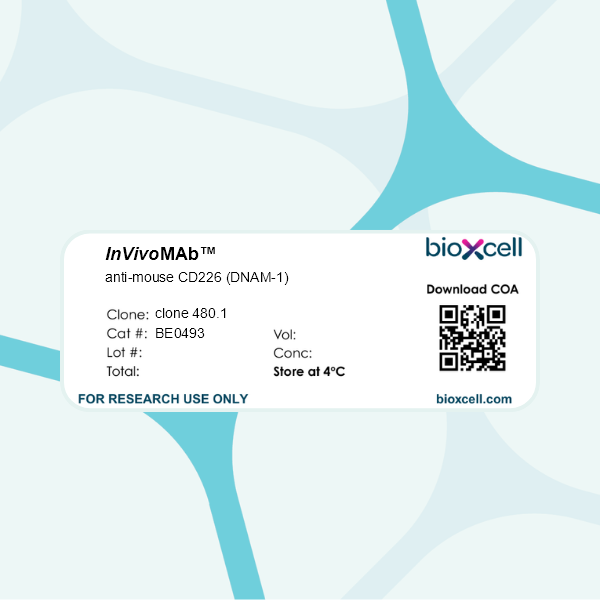
InVivoMAb anti-mouse CD226 (DNAM-1)
Product Description
Specifications
| Isotype | Rat IgG2a, κ |
|---|---|
| Recommended Isotype Control(s) | InVivoMAb rat IgG2a isotype control, anti-trinitrophenol |
| Recommended Dilution Buffer | InVivoPure pH 7.0 Dilution Buffer |
| Immunogen | RBL cells transfected with mDNAM-1 cDNA (RBL–mDNAM-1) |
| Reported Applications |
in vivo blockade of CD226 in vitro blockade of CD226 Flow cytometry |
| Formulation |
PBS, pH 7.0 Contains no stabilizers or preservatives |
| Endotoxin |
≤1EU/mg (≤0.001EU/μg) Determined by LAL assay |
| Purity |
≥95% Determined by SDS-PAGE |
| Sterility | 0.2 µm filtration |
| Production | Purified from cell culture supernatant in an animal-free facility |
| Purification | Protein G |
| Molecular Weight | 150 kDa |
| Storage | The antibody solution should be stored at the stock concentration at 4°C. Do not freeze. |
| Need a Custom Formulation? | See All Antibody Customization Options |
Application References
in vivo blockade of CD226
Weulersse M, Asrir A, Pichler AC, Lemaitre L, Braun M, Carrié N, Joubert MV, Le Moine M, Do Souto L, Gaud G, Das I, Brauns E, Scarlata CM, Morandi E, Sundarrajan A, Cuisinier M, Buisson L, Maheo S, Kassem S, Agesta A, Pérès M, Verhoeyen E, Martinez A
PubMed
CD8+ T cells within the tumor microenvironment (TME) are exposed to various signals that ultimately determine functional outcomes. Here, we examined the role of the co-activating receptor CD226 (DNAM-1) in CD8+ T cell function. The absence of CD226 expression identified a subset of dysfunctional CD8+ T cells present in peripheral blood of healthy individuals. These cells exhibited reduced LFA-1 activation, altered TCR signaling, and a distinct transcriptomic program upon stimulation. CD226neg CD8+ T cells accumulated in human and mouse tumors of diverse origin through an antigen-specific mechanism involving the transcriptional regulator Eomesodermin (Eomes). Despite similar expression of co-inhibitory receptors, CD8+ tumor-infiltrating lymphocyte failed to respond to anti-PD-1 in the absence of CD226. Immune checkpoint blockade efficacy was hampered in Cd226-/- mice. Anti-CD137 (4-1BB) agonists also stimulated Eomes-dependent CD226 loss that limited the anti-tumor efficacy of this treatment. Thus, CD226 loss restrains CD8+ T cell function and limits the efficacy of cancer immunotherapy.
in vivo blockade of CD226
Chauvin JM, Ka M, Pagliano O, Menna C, Ding Q, DeBlasio R, Sanders C, Hou J, Li XY, Ferrone S, Davar D, Kirkwood JM, Johnston RJ, Korman AJ, Smyth MJ, Zarour HM (2020). "IL15 Stimulation with TIGIT Blockade Reverses CD155-mediated NK-Cell Dysfunction
PubMed
Purpose: Natural killer (NK) cells play a critical role in tumor immunosurveillance. Multiple activating and inhibitory receptors (IR) regulate NK-cell-mediated tumor control. The IR T-cell immunoglobulin and ITIM domain (TIGIT) and its counter-receptor CD226 exert opposite effects on NK-cell-mediated tumor reactivity. Experimental design: We evaluated the frequency, phenotype, and functions of NK cells freshly isolated from healthy donors and patients with melanoma with multiparameter flow cytometry. We assessed TIGIT and CD226 cell surface expression and internalization upon binding to CD155. We evaluated the role of IL15 and TIGIT blockade in increasing NK-cell-mediated cytotoxicity in vitro and in two mouse models. Results: NK cells are present at low frequencies in metastatic melanoma, are dysfunctional, and downregulate both TIGIT and CD226 expression. As compared with TIGIT- NK cells, TIGIT+ NK cells exhibit higher cytotoxic capacity and maturation, but paradoxically lower cytotoxicity against CD155+ MHC class I-deficient melanoma cells. Membrane bound CD155 triggers CD226 internalization and degradation, resulting in decreased NK-cell-mediated tumor reactivity. IL15 increases TIGIT and CD226 gene expression by tumor-infiltrating NK cells (TiNKs) and, together with TIGIT blockade, increases NK-cell-mediated melanoma cytotoxicity in vitro and decreases tumor metastasis in two mouse melanoma models. Specific deletion of TIGIT on transferred NK cells enhances the antimetastatic activity of IL15, while CD226 blockade decreases the effects of IL15 and TIGIT blockade. Conclusions: Our findings support the development of novel combinatorial immunotherapy with IL15 and TIGIT blockade to promote NK-cell-mediated destruction of MHC class I-deficient melanoma, which are refractory to CD8+ T-cell-mediated immunity.See related commentary by Pietra et al., p. 5274.
in vivo blockade of CD226
Weulersse M, Asrir A, Pichler AC, Lemaitre L, Braun M, Carrié N, Joubert MV, Le Moine M, Do Souto L, Gaud G, Das I, Brauns E, Scarlata CM, Morandi E, Sundarrajan A, Cuisinier M, Buisson L, Maheo S, Kassem S, Agesta A, Pérès M, Verhoeyen E, Martinez A
PubMed
CD8+ T cells within the tumor microenvironment (TME) are exposed to various signals that ultimately determine functional outcomes. Here, we examined the role of the co-activating receptor CD226 (DNAM-1) in CD8+ T cell function. The absence of CD226 expression identified a subset of dysfunctional CD8+ T cells present in peripheral blood of healthy individuals. These cells exhibited reduced LFA-1 activation, altered TCR signaling, and a distinct transcriptomic program upon stimulation. CD226neg CD8+ T cells accumulated in human and mouse tumors of diverse origin through an antigen-specific mechanism involving the transcriptional regulator Eomesodermin (Eomes). Despite similar expression of co-inhibitory receptors, CD8+ tumor-infiltrating lymphocyte failed to respond to anti-PD-1 in the absence of CD226. Immune checkpoint blockade efficacy was hampered in Cd226-/- mice. Anti-CD137 (4-1BB) agonists also stimulated Eomes-dependent CD226 loss that limited the anti-tumor efficacy of this treatment. Thus, CD226 loss restrains CD8+ T cell function and limits the efficacy of cancer immunotherapy.
in vivo blockade of CD226
Chauvin JM, Ka M, Pagliano O, Menna C, Ding Q, DeBlasio R, Sanders C, Hou J, Li XY, Ferrone S, Davar D, Kirkwood JM, Johnston RJ, Korman AJ, Smyth MJ, Zarour HM (2020). "IL15 Stimulation with TIGIT Blockade Reverses CD155-mediated NK-Cell Dysfunction
PubMed
Purpose: Natural killer (NK) cells play a critical role in tumor immunosurveillance. Multiple activating and inhibitory receptors (IR) regulate NK-cell-mediated tumor control. The IR T-cell immunoglobulin and ITIM domain (TIGIT) and its counter-receptor CD226 exert opposite effects on NK-cell-mediated tumor reactivity. Experimental design: We evaluated the frequency, phenotype, and functions of NK cells freshly isolated from healthy donors and patients with melanoma with multiparameter flow cytometry. We assessed TIGIT and CD226 cell surface expression and internalization upon binding to CD155. We evaluated the role of IL15 and TIGIT blockade in increasing NK-cell-mediated cytotoxicity in vitro and in two mouse models. Results: NK cells are present at low frequencies in metastatic melanoma, are dysfunctional, and downregulate both TIGIT and CD226 expression. As compared with TIGIT- NK cells, TIGIT+ NK cells exhibit higher cytotoxic capacity and maturation, but paradoxically lower cytotoxicity against CD155+ MHC class I-deficient melanoma cells. Membrane bound CD155 triggers CD226 internalization and degradation, resulting in decreased NK-cell-mediated tumor reactivity. IL15 increases TIGIT and CD226 gene expression by tumor-infiltrating NK cells (TiNKs) and, together with TIGIT blockade, increases NK-cell-mediated melanoma cytotoxicity in vitro and decreases tumor metastasis in two mouse melanoma models. Specific deletion of TIGIT on transferred NK cells enhances the antimetastatic activity of IL15, while CD226 blockade decreases the effects of IL15 and TIGIT blockade. Conclusions: Our findings support the development of novel combinatorial immunotherapy with IL15 and TIGIT blockade to promote NK-cell-mediated destruction of MHC class I-deficient melanoma, which are refractory to CD8+ T-cell-mediated immunity.See related commentary by Pietra et al., p. 5274.
in vivo blockade of CD226
Weulersse M, Asrir A, Pichler AC, Lemaitre L, Braun M, Carrié N, Joubert MV, Le Moine M, Do Souto L, Gaud G, Das I, Brauns E, Scarlata CM, Morandi E, Sundarrajan A, Cuisinier M, Buisson L, Maheo S, Kassem S, Agesta A, Pérès M, Verhoeyen E, Martinez A
PubMed
CD8+ T cells within the tumor microenvironment (TME) are exposed to various signals that ultimately determine functional outcomes. Here, we examined the role of the co-activating receptor CD226 (DNAM-1) in CD8+ T cell function. The absence of CD226 expression identified a subset of dysfunctional CD8+ T cells present in peripheral blood of healthy individuals. These cells exhibited reduced LFA-1 activation, altered TCR signaling, and a distinct transcriptomic program upon stimulation. CD226neg CD8+ T cells accumulated in human and mouse tumors of diverse origin through an antigen-specific mechanism involving the transcriptional regulator Eomesodermin (Eomes). Despite similar expression of co-inhibitory receptors, CD8+ tumor-infiltrating lymphocyte failed to respond to anti-PD-1 in the absence of CD226. Immune checkpoint blockade efficacy was hampered in Cd226-/- mice. Anti-CD137 (4-1BB) agonists also stimulated Eomes-dependent CD226 loss that limited the anti-tumor efficacy of this treatment. Thus, CD226 loss restrains CD8+ T cell function and limits the efficacy of cancer immunotherapy.
in vivo blockade of CD226
Chauvin JM, Ka M, Pagliano O, Menna C, Ding Q, DeBlasio R, Sanders C, Hou J, Li XY, Ferrone S, Davar D, Kirkwood JM, Johnston RJ, Korman AJ, Smyth MJ, Zarour HM (2020). "IL15 Stimulation with TIGIT Blockade Reverses CD155-mediated NK-Cell Dysfunction
PubMed
Purpose: Natural killer (NK) cells play a critical role in tumor immunosurveillance. Multiple activating and inhibitory receptors (IR) regulate NK-cell-mediated tumor control. The IR T-cell immunoglobulin and ITIM domain (TIGIT) and its counter-receptor CD226 exert opposite effects on NK-cell-mediated tumor reactivity. Experimental design: We evaluated the frequency, phenotype, and functions of NK cells freshly isolated from healthy donors and patients with melanoma with multiparameter flow cytometry. We assessed TIGIT and CD226 cell surface expression and internalization upon binding to CD155. We evaluated the role of IL15 and TIGIT blockade in increasing NK-cell-mediated cytotoxicity in vitro and in two mouse models. Results: NK cells are present at low frequencies in metastatic melanoma, are dysfunctional, and downregulate both TIGIT and CD226 expression. As compared with TIGIT- NK cells, TIGIT+ NK cells exhibit higher cytotoxic capacity and maturation, but paradoxically lower cytotoxicity against CD155+ MHC class I-deficient melanoma cells. Membrane bound CD155 triggers CD226 internalization and degradation, resulting in decreased NK-cell-mediated tumor reactivity. IL15 increases TIGIT and CD226 gene expression by tumor-infiltrating NK cells (TiNKs) and, together with TIGIT blockade, increases NK-cell-mediated melanoma cytotoxicity in vitro and decreases tumor metastasis in two mouse melanoma models. Specific deletion of TIGIT on transferred NK cells enhances the antimetastatic activity of IL15, while CD226 blockade decreases the effects of IL15 and TIGIT blockade. Conclusions: Our findings support the development of novel combinatorial immunotherapy with IL15 and TIGIT blockade to promote NK-cell-mediated destruction of MHC class I-deficient melanoma, which are refractory to CD8+ T-cell-mediated immunity.See related commentary by Pietra et al., p. 5274.
in vivo blockade of CD226
Mittal D, Lepletier A, Madore J, Aguilera AR, Stannard K, Blake SJ, Whitehall VLJ, Liu C, Bettington ML, Takeda K, Long GV, Scolyer RA, Lan R, Siemers N, Korman A, Teng MWL, Johnston RJ, Dougall WC, Smyth MJ (2019). "CD96 Is an Immune Checkpoint That
PubMed
CD96 is a novel target for cancer immunotherapy shown to regulate NK cell effector function and metastasis. Here, we demonstrated that blocking CD96 suppressed primary tumor growth in a number of experimental mouse tumor models in a CD8+ T cell-dependent manner. DNAM-1/CD226, Batf3, IL12p35, and IFNγ were also critical, and CD96-deficient CD8+ T cells promoted greater tumor control than CD96-sufficient CD8+ T cells. The antitumor activity of anti-CD96 therapy was independent of Fc-mediated effector function and was more effective in dual combination with blockade of a number of immune checkpoints, including PD-1, PD-L1, TIGIT, and CTLA-4. We consistently observed coexpression of PD-1 with CD96 on CD8+ T lymphocytes in tumor-infiltrating leukocytes both in mouse and human cancers using mRNA analysis, flow cytometry, and multiplex IHF. The combination of anti-CD96 with anti-PD-1 increased the percentage of IFNγ-expressing CD8+ T lymphocytes. Addition of anti-CD96 to anti-PD-1 and anti-TIGIT resulted in superior antitumor responses, regardless of the ability of the anti-TIGIT isotype to engage FcR. The optimal triple combination was also dependent upon CD8+ T cells and IFNγ. Overall, these data demonstrate that CD96 is an immune checkpoint on CD8+ T cells and that blocking CD96 in combination with other immune-checkpoint inhibitors is a strategy to enhance T-cell activity and suppress tumor growth.
in vivo blockade of CD226
Mittal D, Lepletier A, Madore J, Aguilera AR, Stannard K, Blake SJ, Whitehall VLJ, Liu C, Bettington ML, Takeda K, Long GV, Scolyer RA, Lan R, Siemers N, Korman A, Teng MWL, Johnston RJ, Dougall WC, Smyth MJ (2019). "CD96 Is an Immune Checkpoint That
PubMed
CD96 is a novel target for cancer immunotherapy shown to regulate NK cell effector function and metastasis. Here, we demonstrated that blocking CD96 suppressed primary tumor growth in a number of experimental mouse tumor models in a CD8+ T cell-dependent manner. DNAM-1/CD226, Batf3, IL12p35, and IFNγ were also critical, and CD96-deficient CD8+ T cells promoted greater tumor control than CD96-sufficient CD8+ T cells. The antitumor activity of anti-CD96 therapy was independent of Fc-mediated effector function and was more effective in dual combination with blockade of a number of immune checkpoints, including PD-1, PD-L1, TIGIT, and CTLA-4. We consistently observed coexpression of PD-1 with CD96 on CD8+ T lymphocytes in tumor-infiltrating leukocytes both in mouse and human cancers using mRNA analysis, flow cytometry, and multiplex IHF. The combination of anti-CD96 with anti-PD-1 increased the percentage of IFNγ-expressing CD8+ T lymphocytes. Addition of anti-CD96 to anti-PD-1 and anti-TIGIT resulted in superior antitumor responses, regardless of the ability of the anti-TIGIT isotype to engage FcR. The optimal triple combination was also dependent upon CD8+ T cells and IFNγ. Overall, these data demonstrate that CD96 is an immune checkpoint on CD8+ T cells and that blocking CD96 in combination with other immune-checkpoint inhibitors is a strategy to enhance T-cell activity and suppress tumor growth.
in vivo blockade of CD226
Mittal D, Lepletier A, Madore J, Aguilera AR, Stannard K, Blake SJ, Whitehall VLJ, Liu C, Bettington ML, Takeda K, Long GV, Scolyer RA, Lan R, Siemers N, Korman A, Teng MWL, Johnston RJ, Dougall WC, Smyth MJ (2019). "CD96 Is an Immune Checkpoint That
PubMed
CD96 is a novel target for cancer immunotherapy shown to regulate NK cell effector function and metastasis. Here, we demonstrated that blocking CD96 suppressed primary tumor growth in a number of experimental mouse tumor models in a CD8+ T cell-dependent manner. DNAM-1/CD226, Batf3, IL12p35, and IFNγ were also critical, and CD96-deficient CD8+ T cells promoted greater tumor control than CD96-sufficient CD8+ T cells. The antitumor activity of anti-CD96 therapy was independent of Fc-mediated effector function and was more effective in dual combination with blockade of a number of immune checkpoints, including PD-1, PD-L1, TIGIT, and CTLA-4. We consistently observed coexpression of PD-1 with CD96 on CD8+ T lymphocytes in tumor-infiltrating leukocytes both in mouse and human cancers using mRNA analysis, flow cytometry, and multiplex IHF. The combination of anti-CD96 with anti-PD-1 increased the percentage of IFNγ-expressing CD8+ T lymphocytes. Addition of anti-CD96 to anti-PD-1 and anti-TIGIT resulted in superior antitumor responses, regardless of the ability of the anti-TIGIT isotype to engage FcR. The optimal triple combination was also dependent upon CD8+ T cells and IFNγ. Overall, these data demonstrate that CD96 is an immune checkpoint on CD8+ T cells and that blocking CD96 in combination with other immune-checkpoint inhibitors is a strategy to enhance T-cell activity and suppress tumor growth.
in vivo blockade of CD226
Li XY, Das I, Lepletier A, Addala V, Bald T, Stannard K, Barkauskas D, Liu J, Aguilera AR, Takeda K, Braun M, Nakamura K, Jacquelin S, Lane SW, Teng MW, Dougall WC, Smyth MJ (2018). "CD155 loss enhances tumor suppression via combined host and tumor-i
PubMed
Critical immune-suppressive pathways beyond programmed death 1 (PD-1) and programmed death ligand 1 (PD-L1) require greater attention. Nectins and nectin-like molecules might be promising targets for immunotherapy, since they play critical roles in cell proliferation and migration and exert immunomodulatory functions in pathophysiological conditions. Here, we show CD155 expression in both malignant cells and tumor-infiltrating myeloid cells in humans and mice. Cd155-/- mice displayed reduced tumor growth and metastasis via DNAM-1 upregulation and enhanced effector function of CD8+ T and NK cells, respectively. CD155-deleted tumor cells also displayed slower tumor growth and reduced metastases, demonstrating the importance of a tumor-intrinsic role of CD155. CD155 absence on host and tumor cells exerted an even greater inhibition of tumor growth and metastasis. Blockade of PD-1 or both PD-1 and CTLA4 was more effective in settings in which CD155 was limiting, suggesting the clinical potential of cotargeting PD-L1 and CD155 function.
in vivo blockade of CD226
Li XY, Das I, Lepletier A, Addala V, Bald T, Stannard K, Barkauskas D, Liu J, Aguilera AR, Takeda K, Braun M, Nakamura K, Jacquelin S, Lane SW, Teng MW, Dougall WC, Smyth MJ (2018). "CD155 loss enhances tumor suppression via combined host and tumor-i
PubMed
Critical immune-suppressive pathways beyond programmed death 1 (PD-1) and programmed death ligand 1 (PD-L1) require greater attention. Nectins and nectin-like molecules might be promising targets for immunotherapy, since they play critical roles in cell proliferation and migration and exert immunomodulatory functions in pathophysiological conditions. Here, we show CD155 expression in both malignant cells and tumor-infiltrating myeloid cells in humans and mice. Cd155-/- mice displayed reduced tumor growth and metastasis via DNAM-1 upregulation and enhanced effector function of CD8+ T and NK cells, respectively. CD155-deleted tumor cells also displayed slower tumor growth and reduced metastases, demonstrating the importance of a tumor-intrinsic role of CD155. CD155 absence on host and tumor cells exerted an even greater inhibition of tumor growth and metastasis. Blockade of PD-1 or both PD-1 and CTLA4 was more effective in settings in which CD155 was limiting, suggesting the clinical potential of cotargeting PD-L1 and CD155 function.
in vivo blockade of CD226
Li XY, Das I, Lepletier A, Addala V, Bald T, Stannard K, Barkauskas D, Liu J, Aguilera AR, Takeda K, Braun M, Nakamura K, Jacquelin S, Lane SW, Teng MW, Dougall WC, Smyth MJ (2018). "CD155 loss enhances tumor suppression via combined host and tumor-i
PubMed
Critical immune-suppressive pathways beyond programmed death 1 (PD-1) and programmed death ligand 1 (PD-L1) require greater attention. Nectins and nectin-like molecules might be promising targets for immunotherapy, since they play critical roles in cell proliferation and migration and exert immunomodulatory functions in pathophysiological conditions. Here, we show CD155 expression in both malignant cells and tumor-infiltrating myeloid cells in humans and mice. Cd155-/- mice displayed reduced tumor growth and metastasis via DNAM-1 upregulation and enhanced effector function of CD8+ T and NK cells, respectively. CD155-deleted tumor cells also displayed slower tumor growth and reduced metastases, demonstrating the importance of a tumor-intrinsic role of CD155. CD155 absence on host and tumor cells exerted an even greater inhibition of tumor growth and metastasis. Blockade of PD-1 or both PD-1 and CTLA4 was more effective in settings in which CD155 was limiting, suggesting the clinical potential of cotargeting PD-L1 and CD155 function.
in vivo blockade of CD226
Wagner AK, Kadri N, Snäll J, Brodin P, Gilfillan S, Colonna M, Bernhardt G, Höglund P, Kärre K, Chambers BJ (2017). "Expression of CD226 is associated to but not required for NK cell education" Nat Commun .
PubMed
DNAX accessory molecule-1 (DNAM-1, also known as CD226) is an activating receptor expressed on subsets of natural killer (NK) and T cells, interacts with its ligands CD155 or CD112, and has co-varied expression with inhibitory receptors. Since inhibitory receptors control NK-cell activation and are necessary for MHC-I-dependent education, we investigated whether DNAM-1 expression is also involved in NK-cell education. Here we show an MHC-I-dependent correlation between DNAM-1 expression and NK-cell education, and an association between DNAM-1 and NKG2A that occurs even in MHC class I deficient mice. DNAM-1 is expressed early during NK-cell development, precedes the expression of MHC-I-specific inhibitory receptors, and is modulated in an education-dependent fashion. Cd226-/- mice have missing self-responses and NK cells with a normal receptor repertoire. We propose a model in which NK-cell education prevents or delays downregulation of DNAM-1. This molecule endows educated NK cells with enhanced effector functions but is dispensable for education.
in vivo blockade of CD226
Wagner AK, Kadri N, Snäll J, Brodin P, Gilfillan S, Colonna M, Bernhardt G, Höglund P, Kärre K, Chambers BJ (2017). "Expression of CD226 is associated to but not required for NK cell education" Nat Commun .
PubMed
DNAX accessory molecule-1 (DNAM-1, also known as CD226) is an activating receptor expressed on subsets of natural killer (NK) and T cells, interacts with its ligands CD155 or CD112, and has co-varied expression with inhibitory receptors. Since inhibitory receptors control NK-cell activation and are necessary for MHC-I-dependent education, we investigated whether DNAM-1 expression is also involved in NK-cell education. Here we show an MHC-I-dependent correlation between DNAM-1 expression and NK-cell education, and an association between DNAM-1 and NKG2A that occurs even in MHC class I deficient mice. DNAM-1 is expressed early during NK-cell development, precedes the expression of MHC-I-specific inhibitory receptors, and is modulated in an education-dependent fashion. Cd226-/- mice have missing self-responses and NK cells with a normal receptor repertoire. We propose a model in which NK-cell education prevents or delays downregulation of DNAM-1. This molecule endows educated NK cells with enhanced effector functions but is dispensable for education.
in vivo blockade of CD226
Wagner AK, Kadri N, Snäll J, Brodin P, Gilfillan S, Colonna M, Bernhardt G, Höglund P, Kärre K, Chambers BJ (2017). "Expression of CD226 is associated to but not required for NK cell education" Nat Commun .
PubMed
DNAX accessory molecule-1 (DNAM-1, also known as CD226) is an activating receptor expressed on subsets of natural killer (NK) and T cells, interacts with its ligands CD155 or CD112, and has co-varied expression with inhibitory receptors. Since inhibitory receptors control NK-cell activation and are necessary for MHC-I-dependent education, we investigated whether DNAM-1 expression is also involved in NK-cell education. Here we show an MHC-I-dependent correlation between DNAM-1 expression and NK-cell education, and an association between DNAM-1 and NKG2A that occurs even in MHC class I deficient mice. DNAM-1 is expressed early during NK-cell development, precedes the expression of MHC-I-specific inhibitory receptors, and is modulated in an education-dependent fashion. Cd226-/- mice have missing self-responses and NK cells with a normal receptor repertoire. We propose a model in which NK-cell education prevents or delays downregulation of DNAM-1. This molecule endows educated NK cells with enhanced effector functions but is dispensable for education.
in vivo blockade of CD226
Blake SJ, Stannard K, Liu J, Allen S, Yong MC, Mittal D, Aguilera AR, Miles JJ, Lutzky VP, de Andrade LF, Martinet L, Colonna M, Takeda K, Kühnel F, Gurlevik E, Bernhardt G, Teng MW, Smyth MJ (2016). "Suppression of Metastases Using a New Lymphocyte
PubMed
CD96 has recently been shown as a negative regulator of mouse natural killer (NK)-cell activity, with Cd96(-/-)mice displaying hyperresponsive NK cells upon immune challenge. In this study, we have demonstrated that blocking CD96 with a monoclonal antibody inhibited experimental metastases in three different tumor models. The antimetastatic activity of anti-CD96 was dependent on NK cells, CD226 (DNAM-1), and IFNγ, but independent of activating Fc receptors. Anti-CD96 was more effective in combination with anti-CTLA-4, anti-PD-1, or doxorubicin chemotherapy. Blocking CD96 in Tigit(-/-)mice significantly reduced experimental and spontaneous metastases compared with its activity in wild-type mice. Co-blockade of CD96 and PD-1 potently inhibited lung metastases, with the combination increasing local NK-cell IFNγ production and infiltration. Overall, these data demonstrate that blocking CD96 is a new and complementary immunotherapeutic strategy to reduce tumor metastases. Significance: This article illustrates the antimetastatic activity and mechanism of action of an anti-CD96 antibody that inhibits the CD96-CD155 interaction and stimulates NK-cell function. Targeting host CD96 is shown to complement surgery and conventional immune checkpoint blockade.
in vivo blockade of CD226
Blake SJ, Stannard K, Liu J, Allen S, Yong MC, Mittal D, Aguilera AR, Miles JJ, Lutzky VP, de Andrade LF, Martinet L, Colonna M, Takeda K, Kühnel F, Gurlevik E, Bernhardt G, Teng MW, Smyth MJ (2016). "Suppression of Metastases Using a New Lymphocyte
PubMed
CD96 has recently been shown as a negative regulator of mouse natural killer (NK)-cell activity, with Cd96(-/-)mice displaying hyperresponsive NK cells upon immune challenge. In this study, we have demonstrated that blocking CD96 with a monoclonal antibody inhibited experimental metastases in three different tumor models. The antimetastatic activity of anti-CD96 was dependent on NK cells, CD226 (DNAM-1), and IFNγ, but independent of activating Fc receptors. Anti-CD96 was more effective in combination with anti-CTLA-4, anti-PD-1, or doxorubicin chemotherapy. Blocking CD96 in Tigit(-/-)mice significantly reduced experimental and spontaneous metastases compared with its activity in wild-type mice. Co-blockade of CD96 and PD-1 potently inhibited lung metastases, with the combination increasing local NK-cell IFNγ production and infiltration. Overall, these data demonstrate that blocking CD96 is a new and complementary immunotherapeutic strategy to reduce tumor metastases. Significance: This article illustrates the antimetastatic activity and mechanism of action of an anti-CD96 antibody that inhibits the CD96-CD155 interaction and stimulates NK-cell function. Targeting host CD96 is shown to complement surgery and conventional immune checkpoint blockade.
in vivo blockade of CD226
Blake SJ, Stannard K, Liu J, Allen S, Yong MC, Mittal D, Aguilera AR, Miles JJ, Lutzky VP, de Andrade LF, Martinet L, Colonna M, Takeda K, Kühnel F, Gurlevik E, Bernhardt G, Teng MW, Smyth MJ (2016). "Suppression of Metastases Using a New Lymphocyte
PubMed
CD96 has recently been shown as a negative regulator of mouse natural killer (NK)-cell activity, with Cd96(-/-)mice displaying hyperresponsive NK cells upon immune challenge. In this study, we have demonstrated that blocking CD96 with a monoclonal antibody inhibited experimental metastases in three different tumor models. The antimetastatic activity of anti-CD96 was dependent on NK cells, CD226 (DNAM-1), and IFNγ, but independent of activating Fc receptors. Anti-CD96 was more effective in combination with anti-CTLA-4, anti-PD-1, or doxorubicin chemotherapy. Blocking CD96 in Tigit(-/-)mice significantly reduced experimental and spontaneous metastases compared with its activity in wild-type mice. Co-blockade of CD96 and PD-1 potently inhibited lung metastases, with the combination increasing local NK-cell IFNγ production and infiltration. Overall, these data demonstrate that blocking CD96 is a new and complementary immunotherapeutic strategy to reduce tumor metastases. Significance: This article illustrates the antimetastatic activity and mechanism of action of an anti-CD96 antibody that inhibits the CD96-CD155 interaction and stimulates NK-cell function. Targeting host CD96 is shown to complement surgery and conventional immune checkpoint blockade.
in vitro blockade of CD226
Flow Cytometry
Martinet L, Ferrari De Andrade L, Guillerey C, Lee JS, Liu J, Souza-Fonseca-Guimaraes F, Hutchinson DS, Kolesnik TB, Nicholson SE, Huntington ND, Smyth MJ (2015). "DNAM-1 expression marks an alternative program of NK cell maturation" Cell Rep 11(1):8
PubMed
Natural killer (NK) cells comprise a heterogeneous population of cells important for pathogen defense and cancer surveillance. However, the functional significance of this diversity is not fully understood. Here, we demonstrate through transcriptional profiling and functional studies that the activating receptor DNAM-1 (CD226) identifies two distinct NK cell functional subsets: DNAM-1(+) and DNAM-1(-) NK cells. DNAM-1(+) NK cells produce high levels of inflammatory cytokines, have enhanced interleukin 15 signaling, and proliferate vigorously. By contrast, DNAM-1(-) NK cells that differentiate from DNAM-1(+) NK cells have greater expression of NK-cell-receptor-related genes and are higher producers of MIP1 chemokines. Collectively, our data reveal the existence of a functional program of NK cell maturation marked by DNAM-1 expression.
in vitro blockade of CD226
Flow Cytometry
Martinet L, Ferrari De Andrade L, Guillerey C, Lee JS, Liu J, Souza-Fonseca-Guimaraes F, Hutchinson DS, Kolesnik TB, Nicholson SE, Huntington ND, Smyth MJ (2015). "DNAM-1 expression marks an alternative program of NK cell maturation" Cell Rep 11(1):8
PubMed
Natural killer (NK) cells comprise a heterogeneous population of cells important for pathogen defense and cancer surveillance. However, the functional significance of this diversity is not fully understood. Here, we demonstrate through transcriptional profiling and functional studies that the activating receptor DNAM-1 (CD226) identifies two distinct NK cell functional subsets: DNAM-1(+) and DNAM-1(-) NK cells. DNAM-1(+) NK cells produce high levels of inflammatory cytokines, have enhanced interleukin 15 signaling, and proliferate vigorously. By contrast, DNAM-1(-) NK cells that differentiate from DNAM-1(+) NK cells have greater expression of NK-cell-receptor-related genes and are higher producers of MIP1 chemokines. Collectively, our data reveal the existence of a functional program of NK cell maturation marked by DNAM-1 expression.
in vivo blockade of CD226
Guillerey C, Ferrari de Andrade L, Vuckovic S, Miles K, Ngiow SF, Yong MC, Teng MW, Colonna M, Ritchie DS, Chesi M, Bergsagel PL, Hill GR, Smyth MJ, Martinet L (2015). "Immunosurveillance and therapy of multiple myeloma are CD226 dependent" J Clin In
PubMed
Multiple myeloma (MM) is an age-dependent hematological malignancy. Evaluation of immune interactions that drive MM relies on in vitro experiments that do not reflect the complex cellular stroma involved in MM pathogenesis. Here we used Vk*MYC transgenic mice, which spontaneously develop MM, and demonstrated that the immune system plays a critical role in the control of MM progression and the response to treatment. We monitored Vk*MYC mice that had been crossed with Cd226 mutant mice over a period of 3 years and found that CD226 limits spontaneous MM development. The CD226-dependent anti-myeloma immune response against transplanted Vk*MYC MM cells was mediated both by NK and CD8+ T cells through perforin and IFN-γ pathways. Moreover, CD226 expression was required for optimal antimyeloma efficacy of cyclophosphamide (CTX) and bortezomib (Btz), which are both standardly used to manage MM in patients. Activation of costimulatory receptor CD137 with mAb (4-1BB) exerted strong antimyeloma activity, while inhibition of coinhibitory receptors PD-1 and CTLA-4 had no effect. Taken together, the results of this study provide in vivo evidence that CD226 is important for MM immunosurveillance and indicate that specific immune components should be targeted for optimal MM treatment efficacy. As progressive immunosuppression associates with MM development, strategies aimed to increase immune functions may have important therapeutic implications in MM.
in vivo blockade of CD226
Guillerey C, Ferrari de Andrade L, Vuckovic S, Miles K, Ngiow SF, Yong MC, Teng MW, Colonna M, Ritchie DS, Chesi M, Bergsagel PL, Hill GR, Smyth MJ, Martinet L (2015). "Immunosurveillance and therapy of multiple myeloma are CD226 dependent" J Clin In
PubMed
Multiple myeloma (MM) is an age-dependent hematological malignancy. Evaluation of immune interactions that drive MM relies on in vitro experiments that do not reflect the complex cellular stroma involved in MM pathogenesis. Here we used Vk*MYC transgenic mice, which spontaneously develop MM, and demonstrated that the immune system plays a critical role in the control of MM progression and the response to treatment. We monitored Vk*MYC mice that had been crossed with Cd226 mutant mice over a period of 3 years and found that CD226 limits spontaneous MM development. The CD226-dependent anti-myeloma immune response against transplanted Vk*MYC MM cells was mediated both by NK and CD8+ T cells through perforin and IFN-γ pathways. Moreover, CD226 expression was required for optimal antimyeloma efficacy of cyclophosphamide (CTX) and bortezomib (Btz), which are both standardly used to manage MM in patients. Activation of costimulatory receptor CD137 with mAb (4-1BB) exerted strong antimyeloma activity, while inhibition of coinhibitory receptors PD-1 and CTLA-4 had no effect. Taken together, the results of this study provide in vivo evidence that CD226 is important for MM immunosurveillance and indicate that specific immune components should be targeted for optimal MM treatment efficacy. As progressive immunosuppression associates with MM development, strategies aimed to increase immune functions may have important therapeutic implications in MM.
in vitro blockade of CD226
Flow Cytometry
Martinet L, Ferrari De Andrade L, Guillerey C, Lee JS, Liu J, Souza-Fonseca-Guimaraes F, Hutchinson DS, Kolesnik TB, Nicholson SE, Huntington ND, Smyth MJ (2015). "DNAM-1 expression marks an alternative program of NK cell maturation" Cell Rep 11(1):8
PubMed
Natural killer (NK) cells comprise a heterogeneous population of cells important for pathogen defense and cancer surveillance. However, the functional significance of this diversity is not fully understood. Here, we demonstrate through transcriptional profiling and functional studies that the activating receptor DNAM-1 (CD226) identifies two distinct NK cell functional subsets: DNAM-1(+) and DNAM-1(-) NK cells. DNAM-1(+) NK cells produce high levels of inflammatory cytokines, have enhanced interleukin 15 signaling, and proliferate vigorously. By contrast, DNAM-1(-) NK cells that differentiate from DNAM-1(+) NK cells have greater expression of NK-cell-receptor-related genes and are higher producers of MIP1 chemokines. Collectively, our data reveal the existence of a functional program of NK cell maturation marked by DNAM-1 expression.
in vivo blockade of CD226
Guillerey C, Ferrari de Andrade L, Vuckovic S, Miles K, Ngiow SF, Yong MC, Teng MW, Colonna M, Ritchie DS, Chesi M, Bergsagel PL, Hill GR, Smyth MJ, Martinet L (2015). "Immunosurveillance and therapy of multiple myeloma are CD226 dependent" J Clin In
PubMed
Multiple myeloma (MM) is an age-dependent hematological malignancy. Evaluation of immune interactions that drive MM relies on in vitro experiments that do not reflect the complex cellular stroma involved in MM pathogenesis. Here we used Vk*MYC transgenic mice, which spontaneously develop MM, and demonstrated that the immune system plays a critical role in the control of MM progression and the response to treatment. We monitored Vk*MYC mice that had been crossed with Cd226 mutant mice over a period of 3 years and found that CD226 limits spontaneous MM development. The CD226-dependent anti-myeloma immune response against transplanted Vk*MYC MM cells was mediated both by NK and CD8+ T cells through perforin and IFN-γ pathways. Moreover, CD226 expression was required for optimal antimyeloma efficacy of cyclophosphamide (CTX) and bortezomib (Btz), which are both standardly used to manage MM in patients. Activation of costimulatory receptor CD137 with mAb (4-1BB) exerted strong antimyeloma activity, while inhibition of coinhibitory receptors PD-1 and CTLA-4 had no effect. Taken together, the results of this study provide in vivo evidence that CD226 is important for MM immunosurveillance and indicate that specific immune components should be targeted for optimal MM treatment efficacy. As progressive immunosuppression associates with MM development, strategies aimed to increase immune functions may have important therapeutic implications in MM.
in vivo blockade of CD226
in vitro blockade of CD226
Flow Cytometry
Chan CJ, Martinet L, Gilfillan S, Souza-Fonseca-Guimaraes F, Chow MT, Town L, Ritchie DS, Colonna M, Andrews DM, Smyth MJ (2014). "The receptors CD96 and CD226 oppose each other in the regulation of natural killer cell functions" Nat Immunol 15(5):43
PubMed
CD96, CD226 (DNAM-1) and TIGIT belong to an emerging family of receptors that interact with nectin and nectin-like proteins. CD226 activates natural killer (NK) cell-mediated cytotoxicity, whereas TIGIT reportedly counterbalances CD226. In contrast, the role of CD96, which shares the ligand CD155 with CD226 and TIGIT, has remained unclear. In this study we found that CD96 competed with CD226 for CD155 binding and limited NK cell function by direct inhibition. As a result, Cd96(-/-) mice displayed hyperinflammatory responses to the bacterial product lipopolysaccharide (LPS) and resistance to carcinogenesis and experimental lung metastases. Our data provide the first description, to our knowledge, of the ability of CD96 to negatively control cytokine responses by NK cells. Blocking CD96 may have applications in pathologies in which NK cells are important.
in vivo blockade of CD226
Ferrari de Andrade L, Ngiow SF, Stannard K, Rusakiewicz S, Kalimutho M, Khanna KK, Tey SK, Takeda K, Zitvogel L, Martinet L, Smyth MJ (2014). "Natural killer cells are essential for the ability of BRAF inhibitors to control BRAFV600E-mutant metastati
PubMed
BRAF(V600E) is a major oncogenic mutation found in approximately 50% of human melanoma that confers constitutive activation of the MAPK pathway and increased melanoma growth. Inhibition of BRAF(V600E) by oncogene targeting therapy increases overall survival of patients with melanoma, but is unable to produce many durable responses. Adaptive drug resistance remains the main limitation to BRAF(V600E) inhibitor clinical efficacy and immune-based strategies could be useful to overcome disease relapse. Tumor microenvironment greatly differs between visceral metastasis and primary cutaneous melanoma, and the mechanisms involved in the antimetastatic efficacy of BRAF(V600E) inhibitors remain to be determined. To address this question, we developed a metastatic BRAF(V600E)-mutant melanoma cell line and demonstrated that the antimetastatic properties of BRAF inhibitor PLX4720 (a research analogue of vemurafenib) require host natural killer (NK) cells and perforin. Indeed, PLX4720 not only directly limited BRAF(V600E)-induced tumor cell proliferation, but also affected NK cell functions. We showed that PLX4720 increases the phosphorylation of ERK1/2, CD69 expression, and proliferation of mouse NK cells in vitro. NK cell frequencies were significantly enhanced by PLX4720 specifically in the lungs of mice with BRAF(V600E) lung metastases. Furthermore, PLX4720 also increased human NK cell pERK1/2, CD69 expression, and IFNγ release in the context of anti-NKp30 and IL2 stimulation. Overall, this study supports the idea that additional NK cell-based immunotherapy (by checkpoint blockade or agonists or cytokines) may combine well with BRAF(V600E) inhibitor therapy to promote more durable responses in melanoma.
in vivo blockade of CD226
in vitro blockade of CD226
Flow Cytometry
Chan CJ, Martinet L, Gilfillan S, Souza-Fonseca-Guimaraes F, Chow MT, Town L, Ritchie DS, Colonna M, Andrews DM, Smyth MJ (2014). "The receptors CD96 and CD226 oppose each other in the regulation of natural killer cell functions" Nat Immunol 15(5):43
PubMed
CD96, CD226 (DNAM-1) and TIGIT belong to an emerging family of receptors that interact with nectin and nectin-like proteins. CD226 activates natural killer (NK) cell-mediated cytotoxicity, whereas TIGIT reportedly counterbalances CD226. In contrast, the role of CD96, which shares the ligand CD155 with CD226 and TIGIT, has remained unclear. In this study we found that CD96 competed with CD226 for CD155 binding and limited NK cell function by direct inhibition. As a result, Cd96(-/-) mice displayed hyperinflammatory responses to the bacterial product lipopolysaccharide (LPS) and resistance to carcinogenesis and experimental lung metastases. Our data provide the first description, to our knowledge, of the ability of CD96 to negatively control cytokine responses by NK cells. Blocking CD96 may have applications in pathologies in which NK cells are important.
in vivo blockade of CD226
Ferrari de Andrade L, Ngiow SF, Stannard K, Rusakiewicz S, Kalimutho M, Khanna KK, Tey SK, Takeda K, Zitvogel L, Martinet L, Smyth MJ (2014). "Natural killer cells are essential for the ability of BRAF inhibitors to control BRAFV600E-mutant metastati
PubMed
BRAF(V600E) is a major oncogenic mutation found in approximately 50% of human melanoma that confers constitutive activation of the MAPK pathway and increased melanoma growth. Inhibition of BRAF(V600E) by oncogene targeting therapy increases overall survival of patients with melanoma, but is unable to produce many durable responses. Adaptive drug resistance remains the main limitation to BRAF(V600E) inhibitor clinical efficacy and immune-based strategies could be useful to overcome disease relapse. Tumor microenvironment greatly differs between visceral metastasis and primary cutaneous melanoma, and the mechanisms involved in the antimetastatic efficacy of BRAF(V600E) inhibitors remain to be determined. To address this question, we developed a metastatic BRAF(V600E)-mutant melanoma cell line and demonstrated that the antimetastatic properties of BRAF inhibitor PLX4720 (a research analogue of vemurafenib) require host natural killer (NK) cells and perforin. Indeed, PLX4720 not only directly limited BRAF(V600E)-induced tumor cell proliferation, but also affected NK cell functions. We showed that PLX4720 increases the phosphorylation of ERK1/2, CD69 expression, and proliferation of mouse NK cells in vitro. NK cell frequencies were significantly enhanced by PLX4720 specifically in the lungs of mice with BRAF(V600E) lung metastases. Furthermore, PLX4720 also increased human NK cell pERK1/2, CD69 expression, and IFNγ release in the context of anti-NKp30 and IL2 stimulation. Overall, this study supports the idea that additional NK cell-based immunotherapy (by checkpoint blockade or agonists or cytokines) may combine well with BRAF(V600E) inhibitor therapy to promote more durable responses in melanoma.
in vivo blockade of CD226
in vitro blockade of CD226
Flow Cytometry
Chan CJ, Martinet L, Gilfillan S, Souza-Fonseca-Guimaraes F, Chow MT, Town L, Ritchie DS, Colonna M, Andrews DM, Smyth MJ (2014). "The receptors CD96 and CD226 oppose each other in the regulation of natural killer cell functions" Nat Immunol 15(5):43
PubMed
CD96, CD226 (DNAM-1) and TIGIT belong to an emerging family of receptors that interact with nectin and nectin-like proteins. CD226 activates natural killer (NK) cell-mediated cytotoxicity, whereas TIGIT reportedly counterbalances CD226. In contrast, the role of CD96, which shares the ligand CD155 with CD226 and TIGIT, has remained unclear. In this study we found that CD96 competed with CD226 for CD155 binding and limited NK cell function by direct inhibition. As a result, Cd96(-/-) mice displayed hyperinflammatory responses to the bacterial product lipopolysaccharide (LPS) and resistance to carcinogenesis and experimental lung metastases. Our data provide the first description, to our knowledge, of the ability of CD96 to negatively control cytokine responses by NK cells. Blocking CD96 may have applications in pathologies in which NK cells are important.
in vivo blockade of CD226
Ferrari de Andrade L, Ngiow SF, Stannard K, Rusakiewicz S, Kalimutho M, Khanna KK, Tey SK, Takeda K, Zitvogel L, Martinet L, Smyth MJ (2014). "Natural killer cells are essential for the ability of BRAF inhibitors to control BRAFV600E-mutant metastati
PubMed
BRAF(V600E) is a major oncogenic mutation found in approximately 50% of human melanoma that confers constitutive activation of the MAPK pathway and increased melanoma growth. Inhibition of BRAF(V600E) by oncogene targeting therapy increases overall survival of patients with melanoma, but is unable to produce many durable responses. Adaptive drug resistance remains the main limitation to BRAF(V600E) inhibitor clinical efficacy and immune-based strategies could be useful to overcome disease relapse. Tumor microenvironment greatly differs between visceral metastasis and primary cutaneous melanoma, and the mechanisms involved in the antimetastatic efficacy of BRAF(V600E) inhibitors remain to be determined. To address this question, we developed a metastatic BRAF(V600E)-mutant melanoma cell line and demonstrated that the antimetastatic properties of BRAF inhibitor PLX4720 (a research analogue of vemurafenib) require host natural killer (NK) cells and perforin. Indeed, PLX4720 not only directly limited BRAF(V600E)-induced tumor cell proliferation, but also affected NK cell functions. We showed that PLX4720 increases the phosphorylation of ERK1/2, CD69 expression, and proliferation of mouse NK cells in vitro. NK cell frequencies were significantly enhanced by PLX4720 specifically in the lungs of mice with BRAF(V600E) lung metastases. Furthermore, PLX4720 also increased human NK cell pERK1/2, CD69 expression, and IFNγ release in the context of anti-NKp30 and IL2 stimulation. Overall, this study supports the idea that additional NK cell-based immunotherapy (by checkpoint blockade or agonists or cytokines) may combine well with BRAF(V600E) inhibitor therapy to promote more durable responses in melanoma.
in vivo blockade of CD226
in vitro blockade of CD226
Chan CJ, Andrews DM, McLaughlin NM, Yagita H, Gilfillan S, Colonna M, Smyth MJ (2010). "DNAM-1/CD155 interactions promote cytokine and NK cell-mediated suppression of poorly immunogenic melanoma metastases" J Immunol 184(2):902-11.
PubMed
A role for NK cells in therapeutic intervention for hematologic malignancies, such as acute myeloid leukemia and multiple myeloma, and nonhematologic malignancies, such as melanoma, is becoming more apparent. DNAM-1 is an NK cell receptor whose importance in facilitating activation signals received by NK cells in natural and cytokine-driven responses to tumor metastases in vivo is poorly explored. In this study, we used matched tumor lines expressing a variety of relevant ligands, neutralizing monoclonal Abs, and DNAM-1 gene-targeted mice to determine the relative importance of DNAM-1-ligand interactions in controlling tumor metastases. Our results demonstrate that NK cells require DNAM-1 for natural or cytokine (IL-2, IL-12, or IL-21) suppression of tumor metastases or their variants expressing CD70 or CD80. In contrast, DNAM-1 was dispensable when tumor cells were targets of Ab-dependent cellular cytotoxicity or presented ligands for NKG2D. CD155 appeared to be a key ligand recognized by DNAM-1 in NK cell-mediated suppression of metastases, and DNAM-1-mediated suppression coincided with perforin activity. Overall, these data implied a general role for DNAM-1-CD155 interactions in NK cell-mediated killing of tumors, even in the presence of tumor CD70 or CD80 expression, and further defined the optimal efficacy requirements of cytokines that directly activate NK cells.
in vivo blockade of CD226
in vitro blockade of CD226
Chan CJ, Andrews DM, McLaughlin NM, Yagita H, Gilfillan S, Colonna M, Smyth MJ (2010). "DNAM-1/CD155 interactions promote cytokine and NK cell-mediated suppression of poorly immunogenic melanoma metastases" J Immunol 184(2):902-11.
PubMed
A role for NK cells in therapeutic intervention for hematologic malignancies, such as acute myeloid leukemia and multiple myeloma, and nonhematologic malignancies, such as melanoma, is becoming more apparent. DNAM-1 is an NK cell receptor whose importance in facilitating activation signals received by NK cells in natural and cytokine-driven responses to tumor metastases in vivo is poorly explored. In this study, we used matched tumor lines expressing a variety of relevant ligands, neutralizing monoclonal Abs, and DNAM-1 gene-targeted mice to determine the relative importance of DNAM-1-ligand interactions in controlling tumor metastases. Our results demonstrate that NK cells require DNAM-1 for natural or cytokine (IL-2, IL-12, or IL-21) suppression of tumor metastases or their variants expressing CD70 or CD80. In contrast, DNAM-1 was dispensable when tumor cells were targets of Ab-dependent cellular cytotoxicity or presented ligands for NKG2D. CD155 appeared to be a key ligand recognized by DNAM-1 in NK cell-mediated suppression of metastases, and DNAM-1-mediated suppression coincided with perforin activity. Overall, these data implied a general role for DNAM-1-CD155 interactions in NK cell-mediated killing of tumors, even in the presence of tumor CD70 or CD80 expression, and further defined the optimal efficacy requirements of cytokines that directly activate NK cells.
in vivo blockade of CD226
in vitro blockade of CD226
Chan CJ, Andrews DM, McLaughlin NM, Yagita H, Gilfillan S, Colonna M, Smyth MJ (2010). "DNAM-1/CD155 interactions promote cytokine and NK cell-mediated suppression of poorly immunogenic melanoma metastases" J Immunol 184(2):902-11.
PubMed
A role for NK cells in therapeutic intervention for hematologic malignancies, such as acute myeloid leukemia and multiple myeloma, and nonhematologic malignancies, such as melanoma, is becoming more apparent. DNAM-1 is an NK cell receptor whose importance in facilitating activation signals received by NK cells in natural and cytokine-driven responses to tumor metastases in vivo is poorly explored. In this study, we used matched tumor lines expressing a variety of relevant ligands, neutralizing monoclonal Abs, and DNAM-1 gene-targeted mice to determine the relative importance of DNAM-1-ligand interactions in controlling tumor metastases. Our results demonstrate that NK cells require DNAM-1 for natural or cytokine (IL-2, IL-12, or IL-21) suppression of tumor metastases or their variants expressing CD70 or CD80. In contrast, DNAM-1 was dispensable when tumor cells were targets of Ab-dependent cellular cytotoxicity or presented ligands for NKG2D. CD155 appeared to be a key ligand recognized by DNAM-1 in NK cell-mediated suppression of metastases, and DNAM-1-mediated suppression coincided with perforin activity. Overall, these data implied a general role for DNAM-1-CD155 interactions in NK cell-mediated killing of tumors, even in the presence of tumor CD70 or CD80 expression, and further defined the optimal efficacy requirements of cytokines that directly activate NK cells.
Flow Cytometry
Gilfillan S, Chan CJ, Cella M, Haynes NM, Rapaport AS, Boles KS, Andrews DM, Smyth MJ, Colonna M (2008). "DNAM-1 promotes activation of cytotoxic lymphocytes by nonprofessional antigen-presenting cells and tumors" J Exp Med 205(13):2965-73.
PubMed
Natural killer (NK) cells and CD8 T cells require adhesion molecules for migration, activation, expansion, differentiation, and effector functions. DNAX accessory molecule 1 (DNAM-1), an adhesion molecule belonging to the immunoglobulin superfamily, promotes many of these functions in vitro. However, because NK cells and CD8 T cells express multiple adhesion molecules, it is unclear whether DNAM-1 has a unique function or is effectively redundant in vivo. To address this question, we generated mice lacking DNAM-1 and evaluated DNAM-1-deficient CD8 T cell and NK cell function in vitro and in vivo. Our results demonstrate that CD8 T cells require DNAM-1 for co-stimulation when recognizing antigen presented by nonprofessional antigen-presenting cells; in contrast, DNAM-1 is dispensable when dendritic cells present the antigen. Similarly, NK cells require DNAM-1 for the elimination of tumor cells that are comparatively resistant to NK cell-mediated cytotoxicity caused by the paucity of other NK cell-activating ligands. We conclude that DNAM-1 serves to extend the range of target cells that can activate CD8 T cell and NK cells and, hence, may be essential for immunosurveillance against tumors and/or viruses that evade recognition by other activating or accessory molecules.
Flow Cytometry
Gilfillan S, Chan CJ, Cella M, Haynes NM, Rapaport AS, Boles KS, Andrews DM, Smyth MJ, Colonna M (2008). "DNAM-1 promotes activation of cytotoxic lymphocytes by nonprofessional antigen-presenting cells and tumors" J Exp Med 205(13):2965-73.
PubMed
Natural killer (NK) cells and CD8 T cells require adhesion molecules for migration, activation, expansion, differentiation, and effector functions. DNAX accessory molecule 1 (DNAM-1), an adhesion molecule belonging to the immunoglobulin superfamily, promotes many of these functions in vitro. However, because NK cells and CD8 T cells express multiple adhesion molecules, it is unclear whether DNAM-1 has a unique function or is effectively redundant in vivo. To address this question, we generated mice lacking DNAM-1 and evaluated DNAM-1-deficient CD8 T cell and NK cell function in vitro and in vivo. Our results demonstrate that CD8 T cells require DNAM-1 for co-stimulation when recognizing antigen presented by nonprofessional antigen-presenting cells; in contrast, DNAM-1 is dispensable when dendritic cells present the antigen. Similarly, NK cells require DNAM-1 for the elimination of tumor cells that are comparatively resistant to NK cell-mediated cytotoxicity caused by the paucity of other NK cell-activating ligands. We conclude that DNAM-1 serves to extend the range of target cells that can activate CD8 T cell and NK cells and, hence, may be essential for immunosurveillance against tumors and/or viruses that evade recognition by other activating or accessory molecules.
Flow Cytometry
Gilfillan S, Chan CJ, Cella M, Haynes NM, Rapaport AS, Boles KS, Andrews DM, Smyth MJ, Colonna M (2008). "DNAM-1 promotes activation of cytotoxic lymphocytes by nonprofessional antigen-presenting cells and tumors" J Exp Med 205(13):2965-73.
PubMed
Natural killer (NK) cells and CD8 T cells require adhesion molecules for migration, activation, expansion, differentiation, and effector functions. DNAX accessory molecule 1 (DNAM-1), an adhesion molecule belonging to the immunoglobulin superfamily, promotes many of these functions in vitro. However, because NK cells and CD8 T cells express multiple adhesion molecules, it is unclear whether DNAM-1 has a unique function or is effectively redundant in vivo. To address this question, we generated mice lacking DNAM-1 and evaluated DNAM-1-deficient CD8 T cell and NK cell function in vitro and in vivo. Our results demonstrate that CD8 T cells require DNAM-1 for co-stimulation when recognizing antigen presented by nonprofessional antigen-presenting cells; in contrast, DNAM-1 is dispensable when dendritic cells present the antigen. Similarly, NK cells require DNAM-1 for the elimination of tumor cells that are comparatively resistant to NK cell-mediated cytotoxicity caused by the paucity of other NK cell-activating ligands. We conclude that DNAM-1 serves to extend the range of target cells that can activate CD8 T cell and NK cells and, hence, may be essential for immunosurveillance against tumors and/or viruses that evade recognition by other activating or accessory molecules.