


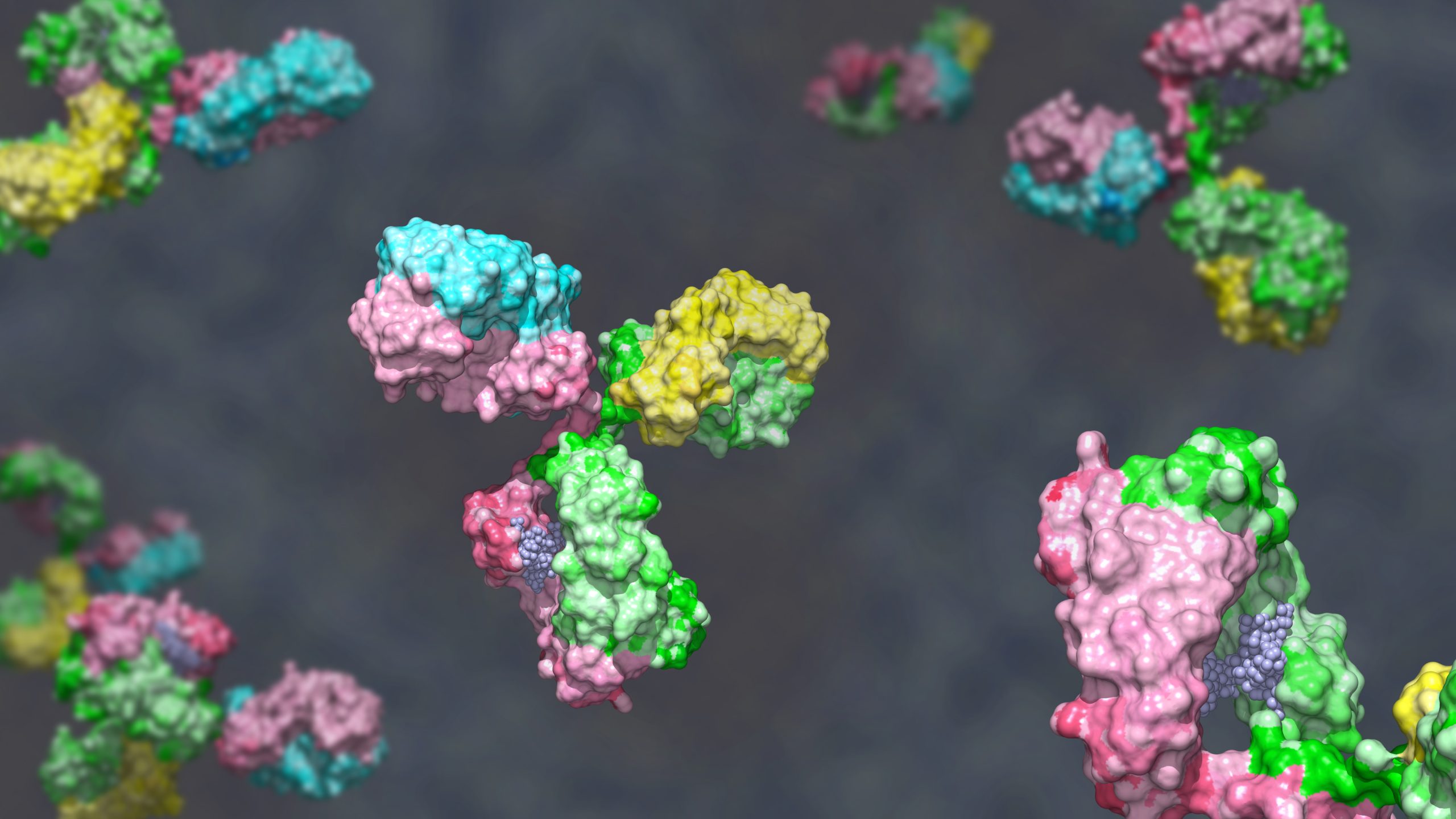


How Fc Engineering Improves Mechanistic Clarity in In Vivo Studies
As antibody studies move from in vitro systems into in vivo models, experimental variables no longer remain isolated. Antibodies engage not only their targets, but also immune biology through their Fc regions, an interaction that can significantly shape study outcomes if not intentionally controlled. Because in vivo systems integrate multiple biological pathways simultaneously, observed outcomes may reflect both target engagement and Fc-driven immune interactions.
Fc Biology as a Hidden Variable
Fc receptor engagement can create biological effects that appear meaningful, even when they are not part of the intended mechanism.
The Fc region of an antibody can interact with Fcγ receptors on immune cells and influence downstream immune activity in several ways. Fc receptor engagement can recruit immune effector cells, alter signaling pathways, and influence immune activation depending on the receptor subtype involved.1, 2
Understanding how Fc regions interact with immune receptors is central to antibody biology. Learn more about antibody structure and Fc function.
- Cell depletion may occur through immune effector recruitment rather than the signaling effect under investigation.
- Signaling changes may be altered by receptor crosslinking or immune activation in ways that complicate interpretation.
- Immune amplification or suppression may exaggerate, mask, or even reverse the expected biological outcome.
These interactions can significantly influence experimental outcomes. Fc receptor engagement has been shown to alter antibody activity in vivo by affecting immune cell recruitment, depletion mechanisms, and receptor crosslinking dynamics.3
These effects are not inherently negative. In some studies they are exactly what the researcher wants to model.
The problem arises when they are present but unintended.
When Fc Effects Are Informative vs. Confounding
Mechanistic clarity depends on matching Fc behavior to the biological question.
There are cases where Fc engagement is useful and biologically informative. Depletion models, effector-dependent mechanisms, and studies focused on immune activation may require intact or enhanced Fc function to answer the question appropriately.
But there are also cases where Fc engagement introduces unwanted noise. This is especially important in checkpoint blockade studies, agonist antibody work, and mechanistic validation experiments where signaling should be isolated from immune-mediated effects.
A useful distinction
Fc effects are not the problem. Unintended Fc effects are the problem.
When antibody Fc behavior does not align with study intent, interpretation becomes less certain and mechanistic conclusions become harder to defend.
The Limits of “Functional” Without Fc Intent
Functional activity does not automatically mean mechanistic control.
Many antibodies are described as functional based on binding or assay performance, yet still introduce Fc-mediated effects that complicate interpretation in in vivo systems.
Without deliberate Fc design, immune effects are often assumed rather than controlled.
How Fc Engineering Restores Mechanistic Control
Fc engineering allows antibody behavior to be aligned with study intent rather than left to chance.
Fc engineering strategies allow researchers to modify antibody effector interactions while preserving target binding. These approaches are widely used to either minimize immune engagement or enhance immune effector activity depending on the intended biological mechanism.4, 5
When Fc behavior is designed intentionally, researchers can better isolate the biology they are trying to understand.
- Fc-silent variants help reduce effector noise and support cleaner interpretation of target-driven signaling or blockade.
- Fc-enhanced variants intentionally leverage immune engagement when depletion or amplified effector function is the desired biological mechanism.
The point of Fc engineering is not simply to remove immune effects. It is to control them.
That control helps researchers distinguish between target biology and antibody-driven immune biology, which is essential for generating clear and defensible in vivo conclusions.
Why Off-the-Shelf Fc Options Matter
Access to defined Fc options early can prevent experimental compromises later.
Custom engineering can add time, cost, and operational complexity. In early-stage research, teams often move forward with whatever reagent is available, even if it is not ideally matched to the study question.
That can create avoidable downstream issues, including redesigns, repeat studies, or data that becomes more difficult to compare across cohorts and timepoints.
Access to defined Fc options early supports:
- Reduced compromise on construct behavior
- Fewer mid-study redesigns
- Stronger timeline protection in preclinical programs
- Cleaner experimental planning from the start
Where RecombiMAb™ Fits
RecombiMAb™ antibodies are built around intentional construct behavior, including defined Fc profiles designed to support more interpretable in vivo studies.
Rather than treating Fc properties as a background feature, RecombiMAb™ antibodies are designed to give researchers access to constructs with defined Fc behavior, including silent and enhanced variants where appropriate.
Recombinant antibody production allows antibody structure, sequence identity, and Fc behavior to be intentionally defined and reproduced across studies. Learn more about recombinant antibodies.
Combined with consistent molecular identity, this approach helps support:
- Mechanistic clarity
- Reproducibility across experiments
- Greater confidence in interpreting in vivo outcomes
The goal is not just antibody availability. It is providing research tools better aligned to the biological questions being asked.
The Takeaway
In vivo studies do not always break down because the target is wrong. They often break down because Fc biology obscures interpretation.
When Fc behavior is intentionally engineered and aligned with study intent, researchers gain greater control over experimental variables and more confidence in the conclusions they draw.
Key takeaway
Intentional Fc engineering does not simply change antibody behavior. It helps restore control, clarify mechanism, and improve confidence in in vivo interpretation.
References
1. Sepúlveda-Delgado J. A Comprehensive Review of Fc Gamma Receptors and Their Biological Functions. Open access article
2. Bournazos S, Ravetch JV. Fcγ Receptor Function and the Design of Vaccination Strategies. Open access article
3. Junker F et al. Fc Gamma Receptors and Their Role in Antigen Uptake and Presentation. Open access article
4. Kang TH, Jung ST. Boosting Therapeutic Potency of Antibodies by Taming Fc Functions. Open access article
5. Saunders KO. Concepts in Fc engineering to modulate antibody effector functions. Frontiers in Immunology. 2019. Open access article