



An in vivo experiment rarely fails at a single, obvious point. More often, the result is simply different the second time around. By then, the first study has already required a cohort of animals, weeks of planning and hands-on work, reagents, animal facility capacity, and analysis time. Needing to repeat a failed experiment also has an opportunity cost: the next experiment waits, a decision about the program is delayed, and another set of animals may be needed to answer a question that researchers thought they had already resolved.
Replication Has More Than One Source of Variation
The costs of nonreproducible experiments make understanding why results vary especially relevant. When an in vivo result does not reproduce, it is natural to question the biology first.
Questions such as whether the model was appropriate, the effect real, or the sample size large enough are important. Animal studies are sensitive to biological and environmental factors that are difficult to standardize across laboratories. While standardization within a single experiment can reduce variability, each laboratory effectively creates its own unique experimental context, limiting the generalizability of findings. Gene–environment interactions can also cause animals with different genetic backgrounds to respond differently to the same treatment. Housing and caging systems, personnel, microbiomes, cage sizes, enrichment, season, time of day, as well as biological variables such as sex, age, and reproductive experience, can all contribute to differences between studies.1
Study design also matters. Inadequate statistical power, incomplete randomization or blinding, differences in dosing or handling, and analytical choices can all influence outcomes.1
But even when the model, hypothesis, and study design are carefully controlled, less visible technical variables can still shift between experiments, including reagent lot, formulation, purity and endotoxin specifications, and handling and storage conditions.
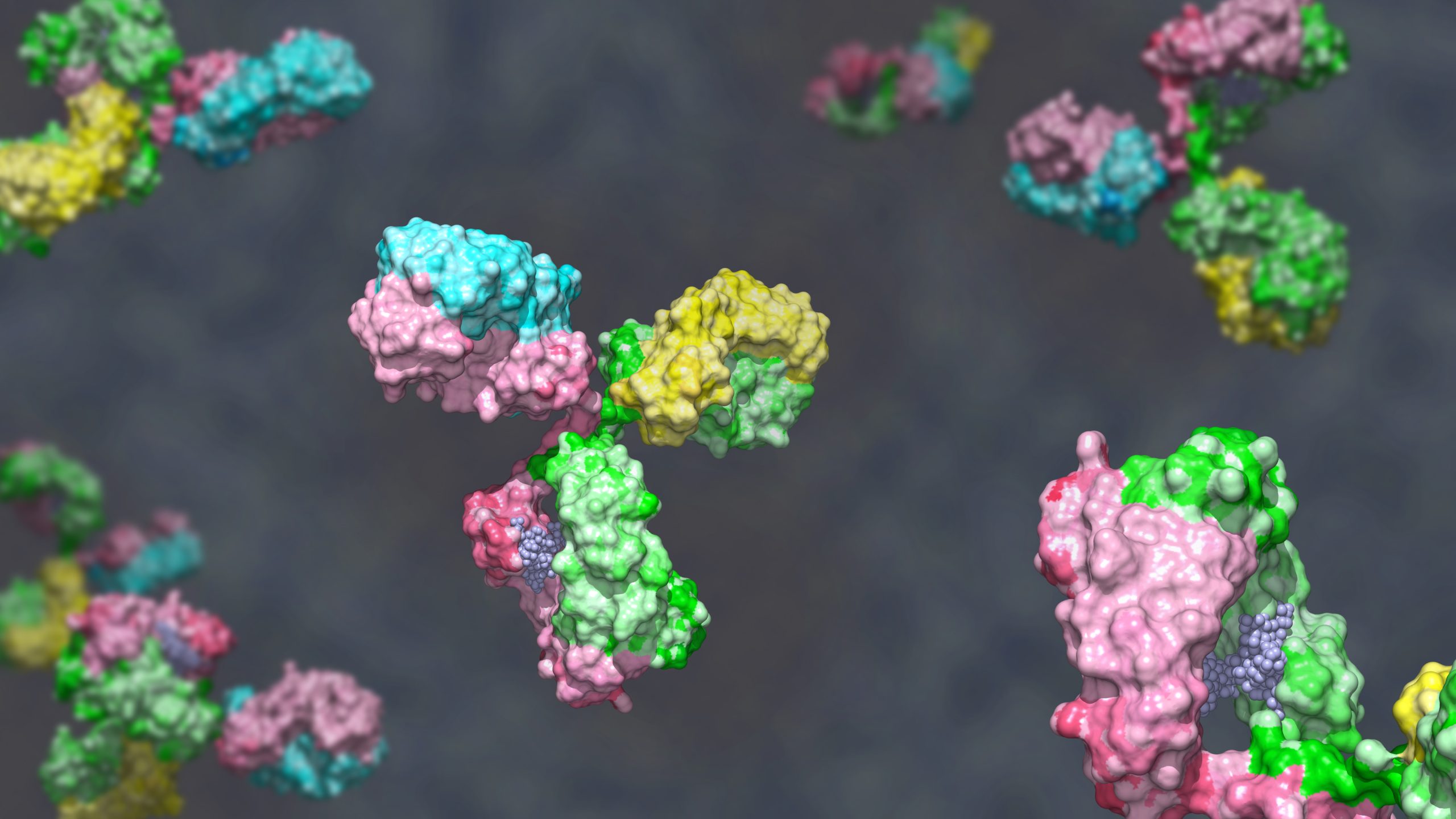
Poor reagent quality control is a major yet under-addressed contributor to the reproducibility crisis, accounting for an estimated 36 percent of irreproducible preclinical experiments in the United States.2 Poorly characterized biological reagents, including antibodies, proteins, and peptides, can introduce substantial variability.3,4 Reagents may differ from their expected identity or sequence, contain impurities or degradation products, or exist in incorrect oligomeric states or aggregated forms. These problems can alter reagent activity, binding kinetics, or effective concentration, producing off-target effects and inconsistent biological responses. Even a single failed quality-control measure can substantially reduce the likelihood of obtaining reliable experimental results.4
When these variables change between experiments, technical variation can be mistaken for biological variability. Reagent quality is therefore one of the many often-overlooked variables worth examining when results fail to replicate.
Separate What Must Be Managed From What Can Be Removed
A useful way to troubleshoot an in vivo experiment is to divide sources of variation into two categories.
Some variation is biological. Animals differ, and those differences are part of the system under study. Researchers cannot eliminate these differences, but they can account for them through appropriate sample sizes, randomization, blocking, controls, and careful consideration of experimental context.
But some variation is technical. These factors are introduced by the materials, procedures, or measurements used to run the experiment. They may not be biologically interesting, and importantly, they may be controllable. Reagent fitness belongs in this second category.
For in vivo research, reducing technical variation does not eliminate the biological complexity that makes these studies valuable. It helps researchers interpret that complexity with greater confidence. Reagents designed and quality controlled for in vivo use can remove one avoidable source of uncertainty by providing greater consistency in factors such as purity, endotoxin level, formulation, and lot-to-lot performance.
This principle underlies Bio X Cell’s approach to in vivo-ready reagents, with quality standards focused on factors such as purity, low endotoxin levels, and carrier protein-free formulations across antibody formats.
When an experiment fails to reproduce, the answer may ultimately lie in the biology. But before changing the hypothesis or repeating an entire study, it is worth asking a simpler question: What changed that did not have to change? Identifying and controlling avoidable sources of variation can make the next experiment easier to interpret—and help researchers focus on the biological differences that actually matter.
References
- Voelkl B, et al. Reproducibility of animal research in light of biological variation. Nat Rev Neurosci. 2020;21(7):384-393.
- Freedman LP, et al. The economics of reproducibility in preclinical research. PLoS Biol. 2015;13(6):e1002165.
- De Marco A, et al. Quality control of protein reagents for the improvement of research data reproducibility. Nat Commun. 2021;12(1):2795.
- Berrow N, et al. Quality control of purified proteins to improve data quality and reproducibility: Results from a large-scale survey. Eur Biophys J. 2021;50(3-4):453-460.