



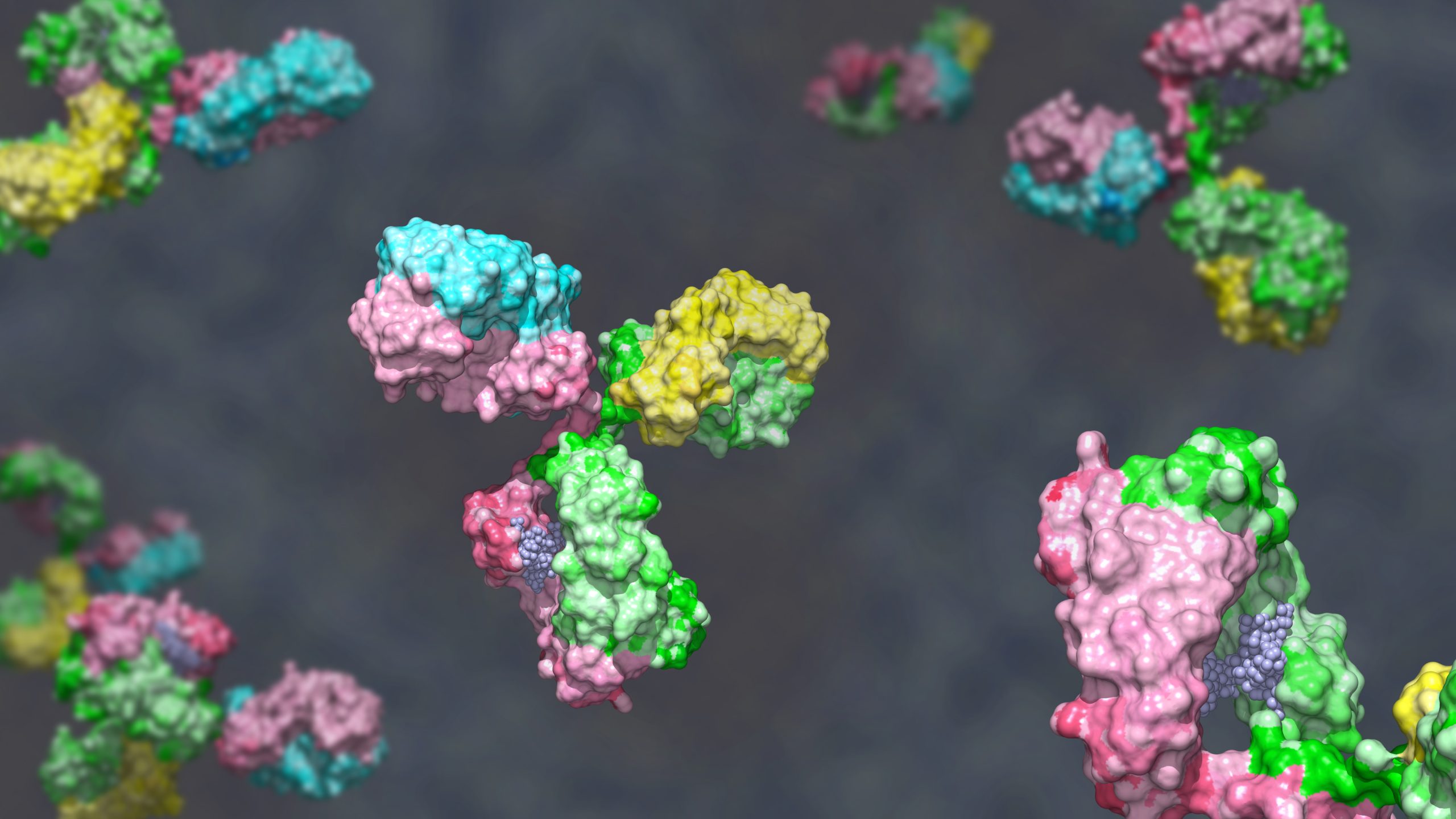

Reference standards — including research-grade biosimilars — are essential throughout biologic development, from assay validation to analytical characterization. Rather than serving as therapeutic candidates themselves, these reagents provide consistent benchmarks that allow researchers to evaluate new methods and compare experimental results with confidence.
A study published in Communications Medicine demonstrated this principle while validating a dendritic cell-based assay designed to predict the clinical immunogenicity of biologic therapeutics. Instead of relying on scarce commercial drug product, the researchers used research-grade biosimilars as standardized reference materials to evaluate assay performance.1
The study highlights an emerging application for research-grade biosimilars: providing reproducible, well-characterized reference standards that support assay development and biologics research.
What Is a Research-Grade Biosimilar?
Research-grade biosimilars are recombinant antibodies designed to closely match the structure and biological activity of approved therapeutic antibodies for research use. Unlike clinical biosimilars intended for patient treatment, research-grade biosimilars are manufactured to support assay development, method validation, comparator studies, and preclinical research.
The Challenge: Validating Predictive Assays with Reliable Reference Standards
Predicting whether a biologic therapeutic will induce anti-drug antibodies (ADAs) remains an important challenge during drug development. Assays intended to evaluate immunogenicity must first be validated against molecules whose clinical behavior is already well understood.
Using commercial therapeutic drug product for assay development is often impractical because of limited availability, cost, and supply constraints. Researchers therefore require reference materials that provide consistent biological performance while remaining readily accessible for repeated experimental use.
Research-grade biosimilars offer a practical solution by providing standardized comparator molecules that can be incorporated into assay development workflows.
How Research-Grade Biosimilars Were Used
Researchers developed a dendritic cell-based assay designed to predict the clinical immunogenicity of biologic therapeutics.To evaluate assay performance, they tested research-grade biosimilars representing several widely used therapeutic antibodies, including adalimumab, trastuzumab, and rituximab. Assay responses were then compared with published clinical immunogenicity data to determine whether the experimental measurements reflected known biological behavior.1
Using standardized biosimilar reference materials allowed the investigators to evaluate assay performance across multiple therapeutics without relying on commercial clinical drug product.
Key Findings
Validation against clinical data produced a clear result:
- Research-grade biosimilars served as standardized reference materials during assay validation.1
- The assay demonstrated a strong correlation between experimental measurements and reported clinical immunogenicity.
- Multiple therapeutic antibodies were evaluated using consistent comparator molecules.
- The study demonstrates how research-grade biosimilars can support reproducible assay development and biologics research.
Featured Products
| Product | Catalog # | Clone | Link |
|---|---|---|---|
| InVivoSIM anti-human TNFa (Adalimumab Biosimilar) | SIM0001 | Adalimumab | View Product |
| InVivoSIM anti-human HER2 (Trastuzumab Biosimilar) | SIM0005 | Trastuzumab | View Product |
| InVivoSIM anti-human CD20 (Rituximab Biosimilar) | SIM0008 | Rituximab | View Product |
Bio X Cell Relevance
This study illustrates a growing role for research-grade biosimilars beyond comparator studies: as standardized reference materials that make predictive assay development possible without relying on scarce commercial drug product. Reliable reference standards are fundamental to reproducible biologics research, whether validating a new assay, developing analytical methods, or comparing therapeutic candidates.
The adalimumab, trastuzumab, and rituximab biosimilars used in this study are part of Bio X Cell's InVivoSIM™ platform, manufactured as well-characterized recombinant antibodies that closely match the structure and biological activity of the approved therapeutics they reference — providing the consistency researchers need for meaningful comparisons across experiments while reducing dependence on limited commercial therapeutic material.
References
- Jarvi NL, Balu-Iyer SV. A mechanistic marker-based screening tool to predict clinical immunogenicity of biologics. Communications Medicine. 2023;3:174. https://doi.org/10.1038/s43856-023-00413-7
Research Use Only