



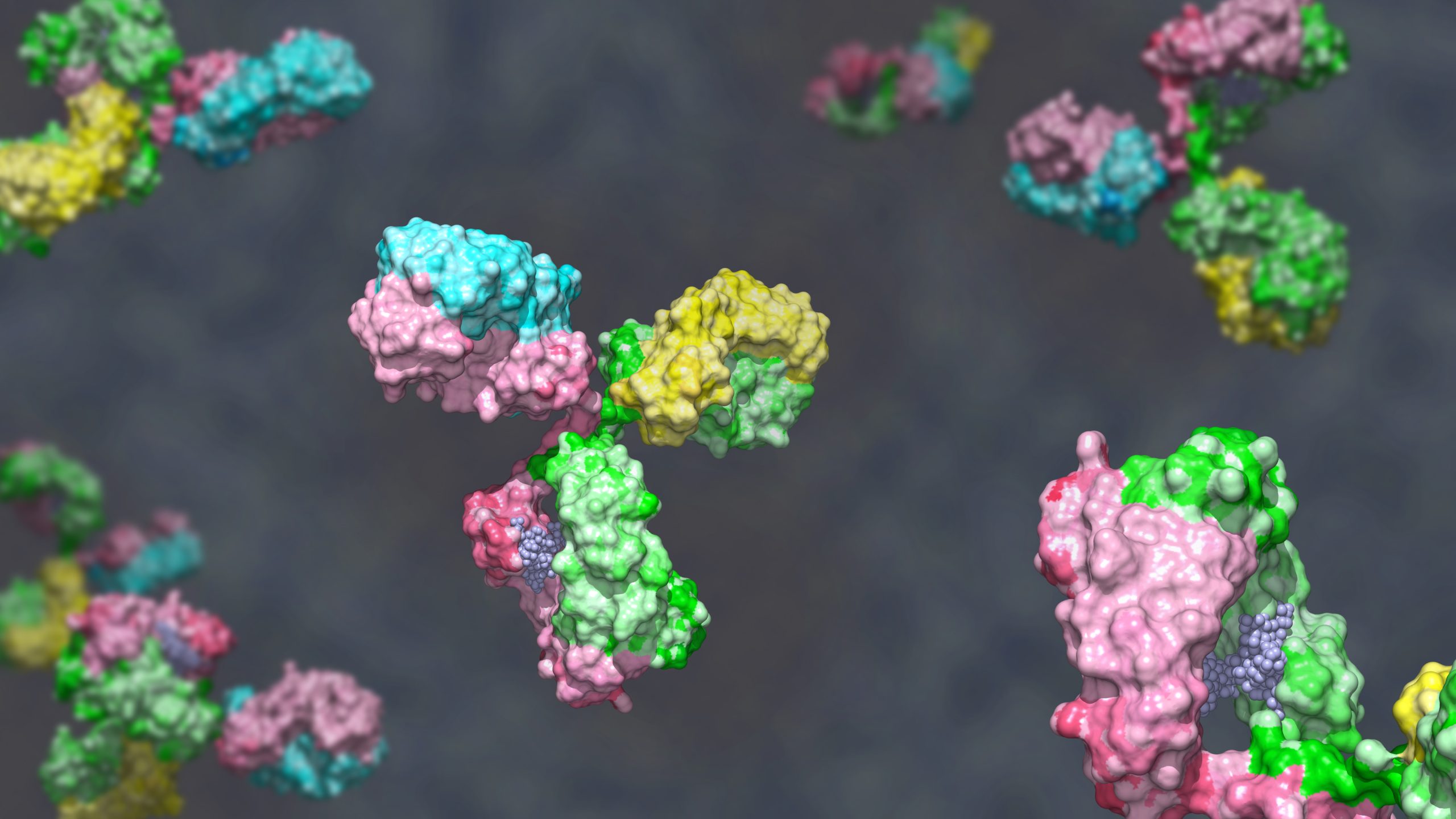

In mechanistic in vivo studies, the choice between a full IgG and an Fc-free antibody format, whether a Fab or an F(ab')2, determines which biology you are measuring, and which biology you may be unintentionally introducing. Antibody format is not a passive variable.
The Result You Did Not Design For
You have designed a clean study. The target is well defined, the model is validated, and the readout is appropriately sensitive. And yet the data look off. The response is stronger than expected, or absent where theory predicts presence. The pattern resists straightforward interpretation.
This is a familiar scenario in mechanistic in vivo work. The instinct is to interrogate the target biology: receptor expression, model fidelity, dosing, and timing. Rarely does the question turn to the antibody itself, not to the variable domain, but to the portion of the molecule often assumed to be functionally neutral.
The Fc region is often treated as an inert scaffold. In practice, it is not.
The Fc Region as an Active Biological Component
The fragment crystallizable (Fc) domain of an IgG molecule provides structural stability and contributes to serum half-life through neonatal Fc receptor (FcRn) recycling. It also engages Fc gamma receptors (FcγRs) expressed across immune cell populations and can activate complement pathways through interaction with C1q in certain contexts.
These interactions are not incidental. FcγRs are expressed on macrophages, monocytes, and NK cells, among other immune cell types. Their engagement can initiate downstream signaling that drives antibody-dependent cellular phagocytosis (ADCP) and antibody-dependent cellular cytotoxicity (ADCC). These effector functions are essential in therapeutic antibody design, where the immune contribution is the intended mechanism. In a mechanistic experiment, the same functions may fall entirely outside the biological question being asked1,2.
Importantly, FcγR signaling is context-dependent. Receptor subtype, expression level, and tissue distribution can all influence how Fc engagement contributes to the observed response.
What Fc Engagement Can Produce In Vivo
Fc-mediated engagement can activate multiple immune pathways depending on the model and context.
Macrophages expressing Fcγ receptors can mediate phagocytosis of antibody-bound targets, contributing to target cell clearance. Weiskopf and Weissman describe macrophage-mediated ADCP as a major mechanism of action for multiple approved cancer antibodies, illustrating that this pathway can operate at scale in vivo3.
Natural killer cells, through FcγRIIIa (CD16), can induce cytotoxic responses against antibody-coated cells. Campbell et al. documented FcγRIIIa-mediated NK cell activation as a central component of elotuzumab's mechanism in multiple myeloma, illustrating how CD16 engagement can drive robust ADCC in vivo4.
Complement pathways may also be engaged through Fc-C1q interactions, contributing to downstream inflammatory signaling and, in certain contexts, direct cell lysis5.
Together, these mechanisms mean that in an in vivo study using a full IgG, the observed response may reflect both target-driven biology and Fc-mediated immune activity.
When Format Becomes a Source of Interpretive Complexity
The practical consequence of Fc engagement is that it can introduce biological signals beyond the intended mechanism under study.
In checkpoint or agonist antibody studies, for example, observed activity may be influenced by FcγR-mediated crosslinking in addition to direct receptor engagement. In TNFR superfamily systems, receptor clustering is often required for signaling, and antibody structure can determine whether that clustering occurs. Richards et al. demonstrated that engineered ligand-mimetic constructs can drive receptor activation independent of FcγR engagement, highlighting how format and structure influence signaling outcomes in systems where clustering is required6.
Valency and Fc engagement are distinct variables. A monovalent Fab cannot crosslink its target; a bivalent F(ab')2 can, through its two arms; and the Fc adds a separate layer of immune engagement on top of binding2. When these contributions are not separated, it can be difficult to tell whether an observed response reflects the intended pathway or the format itself.
Choosing Between Full IgG and Fc-Free Antibody Formats
Reframing antibody format as a deliberate design choice, rather than a default, changes how these variables are managed. An Fc-free antibody format is not a lesser version of the molecule; it is the more precise instrument when the Fc is not part of the question.
Full IgG: Bivalent, Fc present. Enables FcγR engagement, complement activation, and extended half-life. Appropriate when effector function or cell depletion is itself the experimental objective.
Fab (~50 kDa): Monovalent, Fc absent. Removes Fc-mediated interactions and prevents receptor crosslinking. Appropriate for blocking studies where monovalent engagement is required.
F(ab')2 (~110 kDa): Bivalent, Fc absent. Preserves avidity and receptor crosslinking while removing Fc-driven effector functions. Appropriate when bivalent crosslinking is required without an FcγR contribution.
The value of treating format this way is clearest in matched comparisons. Henrickson et al. compared intact antibody against F(ab')₂ for the same clones in vivo and reported differences in T cell depletion, cytokine suppression, and half-life between the two forms, illustrating how holding the clone constant while varying the format changes what is measured7.
A Practical Framework for Format Selection
Use a full IgG when effector function such as ADCC or ADCP is part of the mechanism being studied, target cell depletion is an intended outcome, or Fc biology is explicitly included and controlled.
Use a Fab when blocking without receptor crosslinking is required, Fc-mediated effects need to be removed, or monovalent engagement is necessary.
Use an F(ab')2 when bivalent crosslinking is required, Fc-mediated effects need to be removed, or a format-matched comparison to IgG is needed.
Format Is Only a Control If the Comparison Is Clean
Treating format as a variable works only when everything else is held constant, and that is harder than it sounds. A Fab digested in-house from one lot, compared against an IgG from another, introduces the very variability the experiment is trying to remove.
The cleanest comparison comes from a single clone in matched formats. Bio X Cell makes Fc-free antibody fragments, Fab and F(ab')2, from clones whose products carry more than 30,000 citations across immunology, cancer, and mechanistic research, alongside the full-length and Fc-silenced versions of those clones, so full IgG, Fc-silenced IgG, and fragment can be compared as a matched set rather than assembled from separate sources. These fragments are provided in vivo-ready, low-endotoxin, and carrier protein-free to support reproducible performance across mechanistic studies. It is the difference between measuring the target and measuring the noise.
Flagship depletion and checkpoint clones are ready to order, and any other target can be made to yours. Explore Fab and F(ab')2 fragments from the clones you already trust.
References
- Liu R, Oldham RJ, Teal E, Beers SA, Cragg MS. Fc-engineering for modulated effector functions. Antibodies (Basel). 2020;9(4):64. https://doi.org/10.3390/antib9040064
- Vidarsson G, Dekkers G, Rispens T. IgG subclasses and allotypes: from structure to effector functions. Front Immunol. 2014;5:520. https://doi.org/10.3389/fimmu.2014.00520
- Weiskopf K, Weissman IL. Macrophages are critical effectors of antibody therapies for cancer. mAbs. 2015;7(2):303-310. https://doi.org/10.1080/19420862.2015.1011450
- Campbell KS, Cohen AD, Pazina T. Mechanisms of NK cell activation and clinical activity of the therapeutic SLAMF7 antibody, elotuzumab in multiple myeloma. Front Immunol. 2018;9:2551. https://doi.org/10.3389/fimmu.2018.02551
- van Erp EA, Luytjes W, Ferwerda G, van Kasteren PB. Fc-mediated antibody effector functions during respiratory syncytial virus infection and disease. Front Immunol. 2019;10:548. https://doi.org/10.3389/fimmu.2019.00548
- Richards DM, Marschall V, Billian-Frey K, et al. HERA-GITRL activates T cells and promotes anti-tumor efficacy independent of FcγR-binding functionality. J Immunother Cancer. 2019;7(1):191. https://doi.org/10.1186/s40425-019-0671-4
- Henrickson M, Reid J, Bellet JS, Sawchuk SS, Hirsch R. Comparison of in vivo efficacy and mechanism of action of antimurine monoclonal antibodies directed against TCRαβ (H57-597) and CD3 (145-2C11). Transplantation. 1995;60(8):828-835.