
$178.00 - $4,651.50

$178.00 - $4.00

Choose an Option...
  • 100 mg - $4,651.50
  • 50 mg - $3,286.00
  • 25 mg - $2,183.00
  • 5 mg - $652.00
  • 1 mg - $178.00
  • Custom Amount (Quotes Only)
In stock
Only %1 left

Product Description

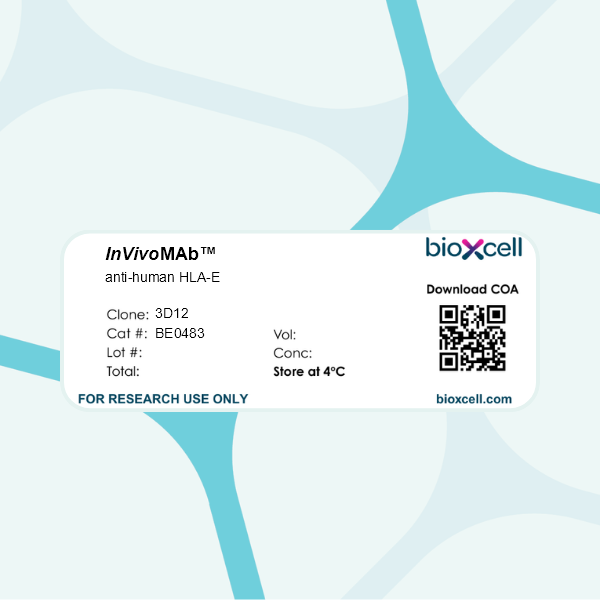
The 3D12 monoclonal antibody reacts with the extracellular domain of human HLA-E, a nonclassical, nonpolymorphic, class Ib HLA molecule involved in immune self-nonself discrimination. This antibody recognizes the HLA-E free heavy chain as well as the heavy chain associated with β2-microglobulin (β2m) and peptide, through a native conformational epitope. HLA-E is expressed by B and T lymphocytes, natural killer (NK) cells, and macrophages. HLA-E is also found overexpressed in several types of solid tumors, e.g., malignant glioblastoma, colorectal cancer, ovarian cancer, cervical cancer, etc. In circulation as well as the tumor microenvironment, HLA-E acts as a major checkpoint for NKG2A+ CD8+ T cells and NK cells. The HLA-E signaling axis operates alongside PD-L1 to negatively regulate the effector responses by T and NK cells. HLA-E interacts with a restricted array of peptides originating from the leader peptides of other class I HLA molecules, and the peptide-bound heterotrimeric complex of HLA-E with β2m serves as a ligand for the NK cell inhibitory receptor KLRD1-KLRC1. These interactions allow NK cells to monitor the expression of MHC class I molecules in healthy cells and to exhibit self-tolerance. During conditions of cellular stress, this function is compromised, and the heterodimeric complex preferentially associates with signal sequence-derived peptides from stress-induced chaperones. In addition to self-peptides, HLA-E can bind and present pathogen-derived peptides, HIV gag peptides, and mycobacterial peptides to HLA-E-restricted CD8-positive T cells, hence inducing cytotoxic and immunoregulatory activities.

Specifications

Isotype Mouse IgG1, κ
Recommended Isotype Control(s) InVivoMAb mouse IgG1 isotype control, unknown specificity
Recommended Dilution Buffer InVivoPure pH 7.0 Dilution Buffer
Immunogen Recombinant HLA-E purified from AEH cells
Reported Applications Immunopeptidomics
immunoprecipitation
in vitro blocking of HLA-E
in vitro functional assay
Flow cytometry
Immunohistochemistry (paraffin)
Immunohistochemistry (frozen)
Immunofluorescence
Western blot
Formulation PBS, pH 7.0
Contains no stabilizers or preservatives
Endotoxin ≤1EU/mg (≤0.001EU/μg)
Determined by LAL assay
Purity ≥95%
Determined by SDS-PAGE
Sterility 0.2 µm filtration
Production Purified from cell culture supernatant in an animal-free facility
Purification Protein G
Molecular Weight 150 kDa
Storage The antibody solution should be stored at the stock concentration at 4°C. Do not freeze.
Need a Custom Formulation? See All Antibody Customization Options

Application References

ELISA
McMurtrey C, Harriff MJ, Swarbrick GM, Duncan A, Cansler M, Null M, Bardet W, Jackson KW, Lewinsohn DA, Hildebrand W, Lewinsohn DM (2017). "T cell recognition of Mycobacterium tuberculosis peptides presented by HLA-E derived from infected human cells
PubMed

HLA-E is a non-conventional MHC Class I molecule that has been recently demonstrated to present pathogen-derived ligands, resulting in the TCR-dependent activation of αβ CD8+ T cells. The goal of this study was to characterize the ligandome displayed by HLA-E following infection with Mycobacterium tuberculosis (Mtb) using an in-depth mass spectrometry approach. Here we identified 28 Mtb ligands derived from 13 different source proteins, including the Esx family of proteins. When tested for activity with CD8+ T cells isolated from sixteen donors, nine of the ligands elicited an IFN-γ response from at least one donor, with fourteen of 16 donors responding to the Rv0634A19-29 peptide. Further evaluation of this immunodominant peptide response confirmed HLA-E restriction and the presence of Rv0634A19-29-reactive CD8+ T cells in the peripheral blood of human donors. The identification of an Mtb HLA-E ligand that is commonly recognized may provide a target for a non-traditional vaccine strategy.

in vitro blocking of HLA-E
Flow Cytometry
Lee N, Goodlett DR, Ishitani A, Marquardt H, Geraghty DE (1998). "HLA-E surface expression depends on binding of TAP-dependent peptides derived from certain HLA class I signal sequences" J Immunol 160(10):4951-60.
PubMed

Previous studies showed that HLA-E was expressed in lymphoblastoid cell line (LCL) 721.221 cells, but surface expression was lacking. To determine the signals controlling surface expression, we constructed a series of hybrid genes using complementary portions derived from the HLA-E and HLA-A2 genes. In this manner, a hybrid of HLA-E was identified, designated AEH, which differed from HLA-E by having the HLA-A2 signal sequence substituting for the HLA-E leader peptide. Transfection of LCL 721.221 cells with AEH induced HLA-E surface expression. Analysis of peptides bound to HLA-E revealed that a nonamer peptide derived from the A2 signal sequence was the predominant peptide bound. LCL 721.221 cells transfected with certain class I genes, including HLA-G, were also sufficient to promote peptide binding and HLA-E surface expression without increasing the level of HLA-E heavy chain synthesis. Peptides bound to HLA-E consisted of nine amino acids, with methionine at position 2 and leucine in the carboxyl-terminal position, and were nearly identical to the leader sequence-derived peptide previously shown to be a predominant peptide bound to the murine Qa-1 Ag. Signal peptides derived from certain HLA-B proteins with threonine in position 2 only marginally up-regulated HLA-E surface expression in .221 cells. An examination of HLA-E peptide binding in the TAP negative cell line .134 indicated that peptide binding to HLA-E was dependent on a functional TAP heterodimer regardless of whether peptide was available in cis, as in the AEH construct, or in trans, as in the class I transfectants of .221 cells.

Flow Cytometry
Li D, Brackenridge S, Walters LC, Swanson O, Harlos K, Rozbesky D, Cain DW, Wiehe K, Scearce RM, Barr M, Mu Z, Parks R, Quastel M, Edwards RJ, Wang Y, Rountree W, Saunders KO, Ferrari G, Borrow P, Jones EY, Alam SM, Azoitei ML, Gillespie GM, McMichae
PubMed

The non-classical class Ib molecule human leukocyte antigen E (HLA-E) has limited polymorphism and can bind HLA class Ia leader peptides (VL9). HLA-E-VL9 complexes interact with the natural killer (NK) cell receptors NKG2A-C/CD94 and regulate NK cell-mediated cytotoxicity. Here we report the isolation of 3H4, a murine HLA-E-VL9-specific IgM antibody that enhances killing of HLA-E-VL9-expressing cells by an NKG2A+ NK cell line. Structural analysis reveal that 3H4 acts by preventing CD94/NKG2A docking on HLA-E-VL9. Upon in vitro maturation, an affinity-optimized IgG form of 3H4 showes enhanced NK killing of HLA-E-VL9-expressing cells. HLA-E-VL9-specific IgM antibodies similar in function to 3H4 are also isolated from naïve B cells of cytomegalovirus (CMV)-negative, healthy humans. Thus, HLA-E-VL9-targeting mouse and human antibodies isolated from the naïve B cell antibody pool have the capacity to enhance NK cell cytotoxicity.

ELISA
Flow Cytometry
Ahmad MA, Radinsky O, Kaufman B, Waidha K, Gharra E, Dim S, Manikandan DB, Ofir N, Jäger D, Meyer M, Elkabets M, Campbell KS, Zektser M, Gazit R, Rouvio O, Momburg F, Porgador A (2025). "HLA-E[pHLA-G] complex-specific monoclonal antibody enhancing NK
PubMed

HLA-E presenting the HLA-G leader peptide VMAPRTLFL (HLA-E[pHLA-G]) on tumor cells plays a crucial role in suppressing natural killer (NK) and cytotoxic CD8+ T cells through NKG2A interaction. While blocking HLA-E:NKG2A is a promising immune checkpoint (IC) approach in cancer therapy, toxicity remains a major clinical concern. We developed a novel IC inhibitor that selectively prevents HLA-E:NKG2A interaction, a monoclonal antibody that selectively targets the HLA-E[pHLA-G] complex, distinguishing cancerous from noncancerous cells. In clinical bone marrow samples from patients with multiple myeloma (MM), 4D7 specifically recognized tumor-associated HLA-E-peptide complexes. Using NK cells from healthy donors, 4D7 effectively blocked the HLA-E:NKG2A interaction, and enhanced NKG2A-positive NK cell activity in autologous MM cell cocultures. Importantly, 4D7 did not inhibit NKG2C-positive NK cells, preserving their activity, even though NKG2C also interacts with HLA-E. In MM-bearing mice treated with human NK cells, 4D7 significantly reduced tumor growth. This targeted approach activates NK cells only against tumor cells presenting HLA-E-peptide complexes, potentially minimizing toxicity compared with current NKG2A inhibitors. The development of 4D7 highlights a promising advancement in immunotherapy for hematologic malignancies, offering improved outcomes for patients with MM, and a foundation for broader application across cancer types.

Flow Cytometry
Marín R, Ruiz-Cabello F, Pedrinaci S, Méndez R, Jiménez P, Geraghty DE, Garrido F (2003). "Analysis of HLA-E expression in human tumors" Immunogenetics 54(11):767-75.
PubMed

Downregulation of MHC class Ia molecule expression is a widespread mechanism used by tumor cells to escape antitumor T-cell-mediated immune responses. However, it is not known why NK cells cannot lyse these MHC class-Ia-deficient tumor targets. Tumors must select additional routes of escape from NK cells. An attractive hypothesis is that the aberrant expression of nonclassical HLA class Ia molecules in tumors provides the required inhibitory signal to NK cells, rendering tumor cells resistant to NK lysis. To analyze the possible role of HLA-E molecules in providing tumor cells with an NK escape mechanism, we studied the cell surface expression of this HLA class Ib molecule in a variety of tumor cell lines with well-defined HLA class Ia alterations. Tests were done with the monoclonal antibody 3D12 recognizing cell surface HLA-E molecules. Our results indicate that HLA-E was mainly detected in leukemia-derived cell lines. In addition, HLA-E was detected in tumor cell lines of different origin. This expression was related with the availability of free beta(2)-microglobulin (beta(2)m) in the cytoplasm of tumor cells. Expression was detected in tumor cell lines showing an imbalance in heavy chain/beta(2)m expression, particularly in tumor cell lines with alterations in the expression of heavy-chain genes. Several lines of evidence favor these conclusions: (1) In the FM55 and NW145 melanoma tumor systems, the reduction in HLA class Ia expression paralleled the increased cell surface detection of HLA-E. (2) A cervical tumor (808) and a melanoma cell line (R22.2) expressing a single HLA-A1 allele also expressed HLA-E. (3) The addition of human beta(2)m to tumor cell lines that expressed the HLA-E(G) allele increased HLA-E cell surface expression. (4) There was no HLA-E cell surface expression in tumor cell lines with total loss of HLA class Ia expression, including cell lines with low transcription of HLA class I heavy chains or with beta(2)m mutations. Our findings suggest that the biological consequences of these cumulative genetic and molecular changes in tumor cells lead to the appearance of HLA-E in a limited number of tumor cell lines with peculiar phenotypic and genotypic characteristics, namely: HLA-class Ia downregulation, free beta(2)m and HLA-E(G) genotype. The aberrant HLA-E expression might be of particular biological relevance in those HLA tumor phenotypes that express a single HLA-A allele when NK inhibition is markedly reduced due to the downregulation of HLA-B and -C alleles.

Flow Cytometry
Lee N, Ishitani A, Geraghty DE (2010). "HLA-F is a surface marker on activated lymphocytes" Eur J Immunol 40(8):2308-18.
PubMed

Of the three nonclassical class I antigens expressed in humans, HLA-F has been least characterized with regard to expression or function. In this study, we examined HLA-F expression focusing on lymphoid cells, where our previous work with homologous cell lines had demonstrated surface HLA-F expression. HLA-F protein expression was observed by Western blot analysis in all resting lymphocytes, including B cells, T cells, NK cells, and monocytes, all of which lacked surface expression in the resting state. Upon activation, using a variety of methods to activate different lymphocyte subpopulations, all cell types that expressed HLA-F intracellularly showed an induction of surface HLA-F protein. An examination of peripheral blood from individuals genetically deficient for TAP and tapasin expression demonstrated the same activation expression profiles for HLA-F,but with altered kinetics post-activation. Further analysis of CD41+CD25+1 Treg showed that HLA-F was not upregulated on the major fraction of these cells when they were activated,whereas CD41+CD25- T cells showed strong expression of surface HLA-F when activated under identical conditions. These findings are discussed with regard to possible functions for HLA-F and its potential clinical use as a marker of an activated immune response.

Immunoprecipitation
Immunofluorescence
Flow Cytometry
Camilli G, Cassotta A, Battella S, Palmieri G, Santoni A, Paladini F, Fiorillo MT, Sorrentino R (2016). "Regulation and trafficking of the HLA-E molecules during monocyte-macrophage differentiation" J Leukoc Biol 99(1):121-30.
PubMed

HLA-E is a nonclassical HLA-class I molecule whose best known role is to protect from the natural killer cells. More recently, an additional function more similar to that of classical HLA-class I molecules, i.e., antigen presentation to T cells, is emerging. However, much remains to be explored about the intracellular trafficking of the HLA-E molecules. With the use of 3 different cellular contexts, 2 monocytic cell lines, U937 and THP1, and peripheral blood monocytes, we show here a remarkable increase of HLA-E during monocyte-macrophage differentiation. This goes independently from the classical HLA-class I, the main source of HLA-E-specific peptides, which is found strongly up-regulated upon differentiation of peripheral blood monocytes but not at all in the case of U937 and THP1 cell lines. Although in all cases, there was a moderate increase of HLA-E expressed in the cell surface, lysis by natural killer cells is comparably restored by an anti-NKG2A antibody in untreated as well as in PMA-differentiated U937 cells. Instead, the great majority of the HLA-E is retained in the vesicles of the autophagy-lysosome network, where they colocalize with the microtubule-associated protein light chain 3, as well as with the lysosomal-associated membrane protein 1. We conclude that differently from the classical HLA-class I molecules, the primary destination of the newly synthesized HLA-E molecules in macrophages is, rather than the cell membrane, the intracellular autophagy-lysosomal vesicles where they are stored and where they can encounter the exogenous antigens.

Immunohistochemistry (frozen)
Shobu T, Sageshima N, Tokui H, Omura M, Saito K, Nagatsuka Y, Nakanishi M, Hayashi Y, Hatake K, Ishitani A (2006). "The surface expression of HLA-F on decidual trophoblasts increases from mid to term gestation" J Reprod Immunol 72(1-2):18-32.
PubMed

HLA-F has recently only begun to be studied in earnest, and has been thought not to be expressed on the cell surface. However, in our previous report, we demonstrated surface expression of HLA-F on extravillous trophoblasts (EVTs) invading the decidua in term placental tissues. To better understand its function, we attempted to determine when surface expression of HLA-F begins during normal pregnancy, and whether there is a difference in expression between normal and preeclamptic placentas, by comparing the expression of HLA-G and -E by immunohistochemical staining with anti-HLA-E, -F and -G antibodies (3D12, 3D11 and 87G, respectively). In EVTs, HLA-F was expressed only in the cytoplasm weakly during the first trimester, after which expression increased and moved to the cell surface with the progression of pregnancy from the second trimester, which was confirmed by the results of double-labeled immunofluorescence staining with anti-HLA-F and anti-HLA-G antibodies, and by flow cytometry using trophoblasts isolated from the decidua. HLA-E showed similar expression as HLA-F, though it was expressed on the cell surface from the first trimester, while HLA-G was expressed strongly in the cytoplasm and on the cell surface during all stages of pregnancy. The expressions of HLA-E, -F and -G in preeclamptic placentas were not different from those in normal placentas, though there were a greater number of necrotic EVTs in preeclampsia. The increase in expression of HLA-E and HLA-F from the second trimester to full term was coincident with the timing of rapid growth of the fetus. Our results suggest that these may function together to prepare an environment that supports fetal growth.

Immunohistochemistry (paraffin)
Hackmon R, Pinnaduwage L, Zhang J, Lye SJ, Geraghty DE, Dunk CE (2017). "Definitive class I human leukocyte antigen expression in gestational placentation: HLA-F, HLA-E, HLA-C, and HLA-G in extravillous trophoblast invasion on placentation, pregnancy
PubMed

Problem: The extravillous trophoblasts (EVT) express HLA-C and HLA-G, but HLA-E and HLA-F are the subject of conflicting reports. In this study, we define the HLA expression profile during active EVT placental implantation, pregnancy development, and parturition. Method of study: Immunohistochemistry, q-PCR, and Western blot were used to investigate HLA-C, HLA-E, and HLA-F placental expression across gestation from the early first trimester, late first trimester, second trimester (n=10 in each), preterm gestation (n=6) to elective term cesarean section and term vaginal deliveries (n=12, 38-41 weeks). EVT explants and Swan71 cells were used to assess HLA-C and HLA-F during active EVT migration. Results: HLA-G, HLA-C, and HLA-F were expressed by 1st-trimester EVT and became intracellular and weaker as gestation progressed. HLA-E was only expressed in 1st-trimester placenta. HLA-F and HLA-C mRNA and protein expression levels showed a significant increase in the fetal villous mesenchyme across gestation. HLA-C levels increased with labor. We detected a 100-kDa HLA-F band in early pregnancy suggesting dimer formation on the EVT surface. These results were confirmed in EVT outgrowths and Swan71 trophoblast which showed that HLA-F and HLA-G are increased on the cell surface of migrating EVT, while HLA-C was internalized. Conclusion: Expression of HLA-F and HLA-G on the cell surface of actively migrating EVT supports their specific role in early EVT invasion and interactions with uterine natural killer cells. HLA-C's limited expression to the proliferative EVT suggests a protective role in the earliest events of implantation but not in active EVT invasion. We also show for the first time that HLA-C may be involved in parturition.

in vitro functional assay
Flow Cytometry
Lee N, Llano M, Carretero M, Ishitani A, Navarro F, López-Botet M, Geraghty DE (1998). "HLA-E is a major ligand for the natural killer inhibitory receptor CD94/NKG2A" Proc Natl Acad Sci U S A 95(9):5199-204.
PubMed

We previously showed that the availability of a nonamer peptide derived from certain HLA class I signal sequences is a necessary requirement for the stabilization of endogenous HLA-E expression on the surface of 721.221 cells. This led us to examine the ability of HLA-E to protect HLA class I transfectants from natural killer (NK) cell-mediated lysis. It was possible to implicate the CD94/NKG2A complex as an inhibitory receptor recognizing this class Ib molecule by using as target a .221 transfectant selectively expressing surface HLA-E. HLA-E had no apparent inhibitory effect mediated through the identified Ig superfamily (Ig-SF) human killer cell inhibitory receptors or ILT2/LIR1. Further studies of CD94/NKG2+ NK cell-mediated recognition of .221 cells transfected with different HLA class I allotypes (i.e., -Cw4, -Cw3, -B7) confirmed that the inhibitory interaction was mediated by CD94/NKG2A recognizing the surface HLA-E molecule, because only antibodies directed against either HLA-E, CD94, or CD94/NKG2A specifically restored lysis. Surface stabilization of HLA-E in cold-treated .221 cells loaded with appropriate peptides was sufficient to confer protection, resulting from recognition of the HLA class Ib molecule by the CD94/NKG2A inhibitory receptor. Consistent with the prediction that the ligand for CD94/NKG2A is expressed ubiquitously, our examination of HLA-E antigen distribution indicated that it is detectable on the surface of a wide variety of cell types.

Flow Cytometry
Sensi M, Pietra G, Molla A, Nicolini G, Vegetti C, Bersani I, Millo E, Weiss E, Moretta L, Mingari MC, Anichini A (2009). "Peptides with dual binding specificity for HLA-A2 and HLA-E are encoded by alternatively spliced isoforms of the antioxidant en
PubMed

Peptides with dual binding specificity for classical HLA class I and non-classical HLA-E molecules have been identified in virus-encoded proteins, but not in cellular proteins from normal or neoplastic cells. Expression screening of a melanoma cDNA library with a CTL clone recognizing an HLA-A2-restricted tumor-specific epitope encoded by mutant peroxiredoxin 5 (Prdx5), a stress-inducible peroxidase, led to the identification of two alternatively spliced isoforms of the same gene. These isoforms, which lack the catalytic cysteine fundamental for enzymatic activity, showed widespread expression in neoplastic and normal tissues but were unstable at the protein level, being detectable, following transient transfection, only after lactacystin treatment to inhibit proteasomal degradation. Isoform-specific sequences which formed, respectively, as result of exon 1 splicing to either exon 3 or 4, encoded two distinct nonapeptides (AMAPIKTHL and AMAPIKVRL, not present in the full-length protein) with anchor residues for HLA-A2 and HLA-E molecules and able to stabilize HLA-A2 and HLA-E cell surface expression. HLA-E+ targets, loaded with these peptides, were not recognized by NK cells expressing CD94/NKG2A inhibitory or CD94/NKG2C activatory receptors. However, both peptides were recognized, although with low avidity, by HLA-E-restricted CD8+ CTL. The nonapeptide AMAPIKVRL was used to elicit HLA-A2-restricted CTL clones that killed peptide-pulsed lymphoblastoid cell lines and melanoma cells expressing the corresponding Prdx5 isoform. Our results suggest that alternatively spliced isoforms of Prdx5, through the generation of HLA-E- and HLA-A2-restricted peptides may be part of immune-mediated stress response contributing to the detection and elimination of damaged normal or neoplastic cells.

Flow Cytometry
Lee N, Ishitani A, Geraghty DE (2010). "HLA-F is a surface marker on activated lymphocytes" Eur J Immunol 40(8):2308-18.
PubMed

Of the three nonclassical class I antigens expressed in humans, HLA-F has been least characterized with regard to expression or function. In this study, we examined HLA-F expression focusing on lymphoid cells, where our previous work with homologous cell lines had demonstrated surface HLA-F expression. HLA-F protein expression was observed by Western blot analysis in all resting lymphocytes, including B cells, T cells, NK cells, and monocytes, all of which lacked surface expression in the resting state. Upon activation, using a variety of methods to activate different lymphocyte subpopulations, all cell types that expressed HLA-F intracellularly showed an induction of surface HLA-F protein. An examination of peripheral blood from individuals genetically deficient for TAP and tapasin expression demonstrated the same activation expression profiles for HLA-F,but with altered kinetics post-activation. Further analysis of CD41+CD25+1 Treg showed that HLA-F was not upregulated on the major fraction of these cells when they were activated,whereas CD41+CD25- T cells showed strong expression of surface HLA-F when activated under identical conditions. These findings are discussed with regard to possible functions for HLA-F and its potential clinical use as a marker of an activated immune response.

Flow Cytometry
Zhuang X, Long EO (2019). "CD28 Homolog Is a Strong Activator of Natural Killer Cells for Lysis of B7H7+ Tumor Cells" Cancer Immunol Res 7(6):939-951.
PubMed

The CD28-B7 family of receptor-ligand pairs regulates lymphocyte responses through costimulation and coinhibition. It includes checkpoint inhibitors, such as PD-1, which limit antitumor and antivirus T-cell responses. CD28 homolog (CD28H) and B7H7 have been identified as a receptor-ligand pair in this family, which has costimulatory activity in T cells. Here, we show that CD28H is expressed in primary natural killer (NK) cells and that it is a strong activator of NK cells through selective synergy with receptors NKp46 and 2B4 to induce degranulation, lysis of target cells, and production of proinflammatory cytokines. Expression of B7H7 on target cells enhanced both natural and antibody-dependent cellular cytotoxicity of NK cells. Mutation of tyrosine 192 on the CD28H cytoplasmic tail abolished NK-cell activation through CD28H. As B7H7 is broadly expressed in tumor tissues, we engineered a CD28H chimeric antigen receptor (CD28H-CAR) consisting of full-length CD28H fused to the cytoplasmic domain of T-cell receptor ζ chain. Remarkably, expression of CD28H-CAR in NK cells triggered lysis of B7H7+ HLA-E+ tumor cells by overriding inhibition by the HLA-E receptor NKG2A. The cytoplasmic domains of CD28H and of the ζ chain were both required for this activity. Thus, CD28H is a powerful activation receptor of NK cells that broadens their antitumor activity and holds promise as a component of NK-based CARs for cancer immunotherapy.

Immunopeptidomics
Goodridge JP, Burian A, Lee N, Geraghty DE (2010). "HLA-F complex without peptide binds to MHC class I protein in the open conformer form" J Immunol 184(11):6199-208.
PubMed

HLA-F has low levels of polymorphism in humans and is highly conserved among primates, suggesting a conserved function in the immune response. In this study, we probed the structure of HLA-F on the surface of B lymphoblastoid cell lines and activated lymphocytes by direct measurement of peptide binding to native HLA-F. Our findings suggested that HLA-F is expressed independently of bound peptide, at least in regard to peptide complexity profiles similar to those of either HLA-E or classical MHC class I (MHC-I). As a further probe of native HLA-F structure, we used a number of complementary approaches to explore the interactions of HLA-F with other molecules, at the cell surface, intracellularly, and in direct physical biochemical measurements. This analysis demonstrated that HLA-F surface expression was coincident with MHC-I H chain (HC) expression and was downregulated upon perturbation of MHC-I HC structure. It was further possible to directly demonstrate that MHC-I would interact with HLA-F only when in the form of an open conformer free of peptide and not as a trimeric complex. This interaction was directly observed by coimmunoprecipitation and by surface plasmon resonance and indirectly on the surface of cells through coincident tetramer and MHC-I HC colocalization. These data suggest that HLA-F is expressed independently of peptide and that a physical interaction specific to MHC-I HC plays a role in the function of MHC-I HC expression in activated lymphocytes.

Flow Cytometry
Immunoprecipitation
Western Blot
Tremante E, Lo Monaco E, Ingegnere T, Sampaoli C, Fraioli R, Giacomini P (2015). "Monoclonal antibodies to HLA-E bind epitopes carried by unfolded β2 m-free heavy chains" Eur J Immunol 45(8):2356-64.
PubMed

Since HLA-E heavy chains accumulate free of their light β2 -microglobulin (β2 m) subunit, raising mAbs to folded HLA-E heterodimers has been difficult, and mAb characterization has been controversial. Herein, mAb W6/32 and 5 HLA-E-restricted mAbs (MEM-E/02, MEM-E/07, MEM-E/08, DT9, and 3D12) were tested on denatured, acid-treated, and natively folded (both β2 m-associated and β2 m-free) HLA-E molecules. Four distinct conformations were detected, including unusual, partially folded (and yet β2 m-free) heavy chains reactive with mAb DT9. In contrast with previous studies, epitope mapping and substitution scan on thousands of overlapping peptides printed on microchips revealed that mAbs MEM-E/02, MEM-E/07, and MEM-E/08 bind three distinct α1 and α2 domain epitopes. All three epitopes are linear since they span just 4-6 residues and are "hidden" in folded HLA-E heterodimers. They contain at least one HLA-E-specific residue that cannot be replaced by single substitutions with polymorphic HLA-A, HLA-B, HLA-C, HLA-F, and HLA-G residues. Finally, also the MEM-E/02 and 3D12 epitopes are spatially distinct. In summary, HLA-E-specific residues are dominantly immunogenic, but only when heavy chains are locally unfolded. Consequently, the available mAbs fail to selectively bind conformed HLA-E heterodimers, and HLA-E expression may have been inaccurately assessed in some previous oncology, reproductive immunology, virology, and transplantation studies.

Immunopeptidomics
Estephan H, Hammond EM, Adamopoulou E (2025). "Immunopeptidomics Workflow for Isolation and LC-MS/MS Analysis of MHC Class I-Bound Peptides Under Hypoxic Conditions" Bio Protoc 15(22):e5505.
PubMed

Immunopeptidomics enables the identification of peptides presented by major histocompatibility complex (MHC) molecules, offering insights into antigen presentation and immune recognition. Understanding these mechanisms in hypoxic conditions is crucial for deciphering immune responses within the tumor microenvironment. Current immunopeptidomics approaches do not capture hypoxia-induced changes in the repertoire of MHC-presented peptides. This protocol describes the isolation of MHC class I-bound peptides from in vitro hypoxia-treated cells, followed by liquid chromatography-tandem mass spectrometry (LC-MS/MS) analysis. It describes optimized steps for cell lysis, immunoaffinity purification, peptide elution, and MS-compatible preparation under controlled low-oxygen conditions. The method is compatible with various quantitative mass spectrometry approaches and can be adapted to different cell types. This workflow provides a reliable and reproducible approach to studying antigen presentation under hypoxic conditions, thereby enhancing physiological relevance and facilitating deeper immunological insights. Key features • Enables isolation of MHC class I-bound peptides from cells cultured under hypoxic conditions. • Designed for low-input samples and optimized for maintaining cell viability during extended hypoxic exposure. • Compatible with label-free LC-MS/MS for detailed immunopeptidome analysis. • Adaptable to all human and murine cell lines commonly used in cancer and immunology research.

Immunopeptidomics
in vitro blocking of HLA-E
Flow Cytometry
Wallace Z, Heunis T, Paterson RL, Suckling RJ, Grant T, Dembek M, Donoso J, Brener J, Long J, Bunjobpol W, Gibbs-Howe D, Kay DP, Leneghan DB, Godinho LF, Walker A, Singh PK, Knox A, Leonard S, Dorrell L (2024). "Instability of the HLA-E peptidome of
PubMed

Naturally occurring T cells that recognize microbial peptides via HLA-E, a nonpolymorphic HLA class Ib molecule, could provide the foundation for new universal immunotherapeutics. However, confidence in the biological relevance of putative ligands is crucial, given that the mechanisms by which pathogen-derived peptides can access the HLA-E presentation pathway are poorly understood. We systematically interrogated the HIV proteome using immunopeptidomic and bioinformatic approaches, coupled with biochemical and cellular assays. No HIV HLA-E peptides were identified by tandem mass spectrometry analysis of HIV-infected cells. In addition, all bioinformatically predicted HIV peptide ligands (>80) were characterized by poor complex stability. Furthermore, infected cell elimination assays using an affinity-enhanced T cell receptor bispecific targeted to a previously reported HIV Gag HLA-E epitope demonstrated inconsistent presentation of the peptide, despite normal HLA-E expression on HIV-infected cells. This work highlights the instability of the HIV HLA-E peptidome as a major challenge for drug development.

Flow Cytometry
Lee N, Goodlett DR, Ishitani A, Marquardt H, Geraghty DE (1998). "HLA-E surface expression depends on binding of TAP-dependent peptides derived from certain HLA class I signal sequences" J Immunol 160(10):4951-60.
PubMed

Previous studies showed that HLA-E was expressed in lymphoblastoid cell line (LCL) 721.221 cells, but surface expression was lacking. To determine the signals controlling surface expression, we constructed a series of hybrid genes using complementary portions derived from the HLA-E and HLA-A2 genes. In this manner, a hybrid of HLA-E was identified, designated AEH, which differed from HLA-E by having the HLA-A2 signal sequence substituting for the HLA-E leader peptide. Transfection of LCL 721.221 cells with AEH induced HLA-E surface expression. Analysis of peptides bound to HLA-E revealed that a nonamer peptide derived from the A2 signal sequence was the predominant peptide bound. LCL 721.221 cells transfected with certain class I genes, including HLA-G, were also sufficient to promote peptide binding and HLA-E surface expression without increasing the level of HLA-E heavy chain synthesis. Peptides bound to HLA-E consisted of nine amino acids, with methionine at position 2 and leucine in the carboxyl-terminal position, and were nearly identical to the leader sequence-derived peptide previously shown to be a predominant peptide bound to the murine Qa-1 Ag. Signal peptides derived from certain HLA-B proteins with threonine in position 2 only marginally up-regulated HLA-E surface expression in .221 cells. An examination of HLA-E peptide binding in the TAP negative cell line .134 indicated that peptide binding to HLA-E was dependent on a functional TAP heterodimer regardless of whether peptide was available in cis, as in the AEH construct, or in trans, as in the class I transfectants of .221 cells.

View More

Product FAQs