
Catalog #RP030
Recombinant human IL-1β protein
Reactivities
Human
Applications
Maintenance and differentiation of hematopoietic stem cells
Directed osteogenic differentiation of mesenchymal stem cells
Neural stem cell proliferation and neuronal differentiation
Activation of M2 macrophages
Activation of Th17 cells
Directed osteogenic differentiation of mesenchymal stem cells
Neural stem cell proliferation and neuronal differentiation
Activation of M2 macrophages
Activation of Th17 cells
Product Description
Recombinant human IL-1β protein (interleukin-1 beta) is a 153-amino-acid pro-inflammatory cytokine of the interleukin-1 family and a potent mediator of inflammation and immune responses. Synthesized as an inactive precursor (pro-IL-1β) that is cleaved by caspase-1 into its active, beta-trefoil-fold form, IL-1β binds the IL-1 receptor type 1 (IL-1R1) with the accessory protein IL-1RAcP to trigger transcription-factor activation and pro-inflammatory gene expression, with signaling tightly controlled by IL-1 receptor antagonist (IL-1Ra) and soluble receptors. IL-1β initiates and amplifies the inflammatory cascade, recruiting antigen-presenting cells, macrophages and T lymphocytes, inducing fever and stimulating acute-phase protein production. In cell culture, IL-1β stimulates immune, epithelial, endothelial and fibroblast cells, polarizes macrophages toward M2 and CD4+ T cells toward Th1/Th17, works with TNF-α to model inflammation, and helps maintain mesenchymal stromal and hematopoietic progenitor cells and guide their differentiation. Because dysregulated IL-1β drives autoimmune disease, rheumatoid arthritis, type 2 diabetes, inflammatory bowel disease and tumor progression, IL-1β inhibitors are important therapeutics, making recombinant IL-1β a key reagent for inflammation and immunology research.
This protein is optimized for in vivo and functional applications: low-endotoxin, tag-free, and carrier-free, supporting reproducible performance in demanding preclinical and bioactivity studies.
Species reactivity: human. Species similarity: mouse - 78%, rat - 77%, bovine - 67%, porcine - 66%.
This protein is optimized for in vivo and functional applications: low-endotoxin, tag-free, and carrier-free, supporting reproducible performance in demanding preclinical and bioactivity studies.
Species reactivity: human. Species similarity: mouse - 78%, rat - 77%, bovine - 67%, porcine - 66%.
Specifications
| Reported Applications |
Maintenance and differentiation of hematopoietic stem cells Directed osteogenic differentiation of mesenchymal stem cells Neural stem cell proliferation and neuronal differentiation Activation of M2 macrophages Activation of Th17 cells |
|---|---|
| Formulation | Lyophilized, white powder |
| Endotoxin |
≤35 EU/mg LAL assay |
| Purity |
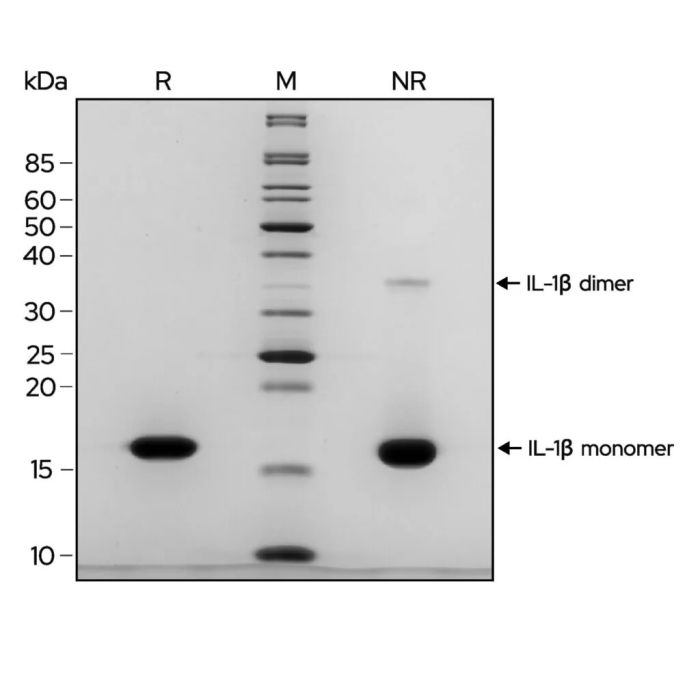
≥95% Determined by SDS-PAGE |
| Sterility | Sterile |
| Production | Microbial. Expressed in E. coli |
| Molecular Weight | 17.3 kDa (monomer) |
| Storage | Store lyophilized protein between -20 °C and -80 °C until the date of expiry. Avoid freeze-thaw cycles |
| Mycoplasma | Negative |
| Bioactivity Assay | No significant difference between EC50 of reference and test lots |
| Reconstitution | Resuspend in sterile-filtered water at >50 µg/ml. Once reconstituted, store in single-use aliquots to avoid freeze-thaw cycles. Store reconstituted protein at -20 °C to -80 °C for a maximum of 12 months or until the expiry date if sooner. |
| Shelf Life | This product has a guaranteed shelf-life of one year from the date of customer receipt when stored as recommended. |